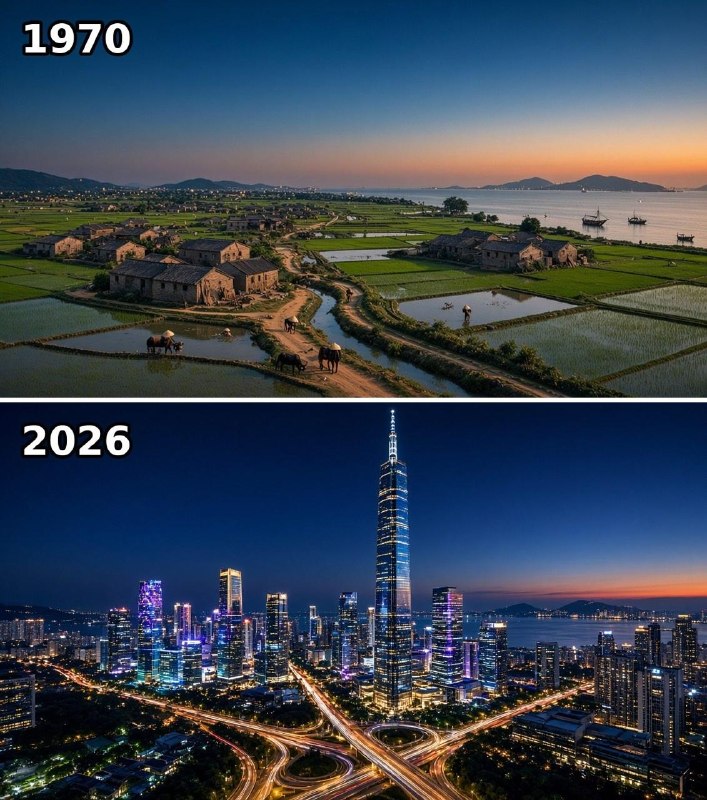
CNN calls Shenzhen "the equivalent of Silicon Valley" in the US and describes it as a "futuristic city home to technology entrepreneurs".
In the late 1970s, the Chinese leadership sought ways to deal with the crisis and give impetus to the development of the country, setting a course for reform and opening up, as well as creating the so-called socialist market economy. SEZs in Shenzhen began to develop in the early 1980s; Preferential tax, currency, customs and administrative regimes were introduced to the city to attract foreign investors.
Xi Zhongxun (by the way, Xi's father) suggested to the then Chinese leader, Deng Xiaoping, to conduct an experiment in the liberalization of trade and the introduction of market mechanisms in the south of the country in order to attract foreign capital.
Before the development of the SEZ, Shenzhen was a small fishing village, the number of local residents was less than 30 thousand people, but now it is one of the largest cities in China with a population of more than 18 million people.
The area of Shenzhen is about 2,000 square meters. km, in this it is slightly inferior to New York.
Shenzhen ranks second in the world in the number of billionaire residents (132), second only to New York (146), according to Huron's Global Rich List - 2026.
Dimitri Nicotin.