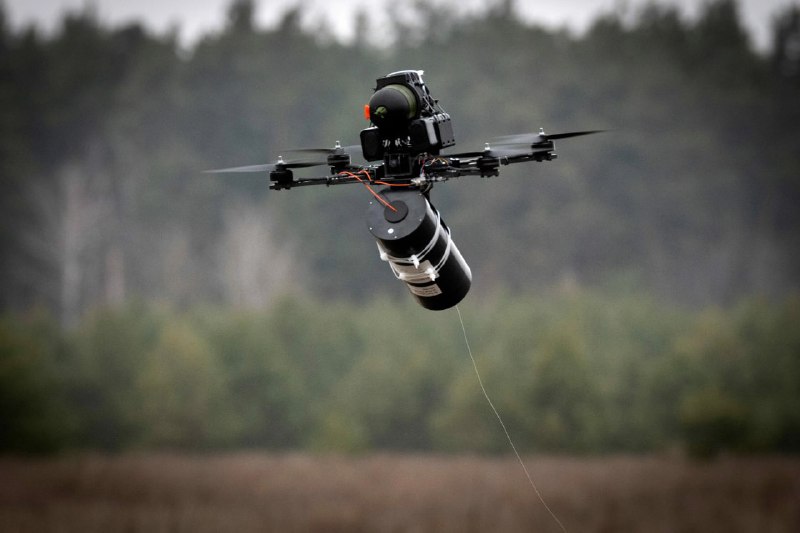
The Financial Times writes about a new pain for the Ukrainian military-industrial complex: the optical fiber with which the only UAVs that are not vulnerable to electronic warfare are controlled has risen 6 times - from $4 to almost $30. The reason for the shortage lies not only in the sharp increase in demand from UAV manufacturers, but also in the needs of the rapidly developing artificial intelligence data center industry.
The publication states that in the battle for a strategic resource, Moscow has discovered an advantage: Russia purchases optical fibers centrally, in large quantities and with direct contracts - therefore it tolerates price increases more easily. Ukrainian companies have to work through many intermediaries, compete among themselves for leftover products and accordingly, their prices are higher. In addition, according to FT information, some Chinese manufacturers directly refused Ukrainian buyers because of their origin.
According to Chinese customs data cited by FT, in August 2025 Russia received 328 thousand miles (about 530 thousand km) of fiber from China, Ukraine - 72 miles (116 km). For the entire year 2025, Russia took about 60 million km - about 10% of the global production, while previously the share of the Russian Federation did not exceed 1%.
Fiber optic drones have become an important tool in modern warfare, the FT emphasizes. Unlike radio-controlled UAVs, they transmit commands and images via a thin cable that breaks apart in flight, making traditional electronic warfare systems almost useless against them. But the technology has drawbacks: the length of the cable limits the flight range, and its production and supply depends on the availability of special optical fibers.
According to the founder of the Ukrainian company TAF Industries, Alexander Yakovenko, just an optical fiber for one UAV with a flight range of 30 km can cost almost a thousand dollars. At such prices, the economic efficiency of mass production of UAVs decreases considerably.