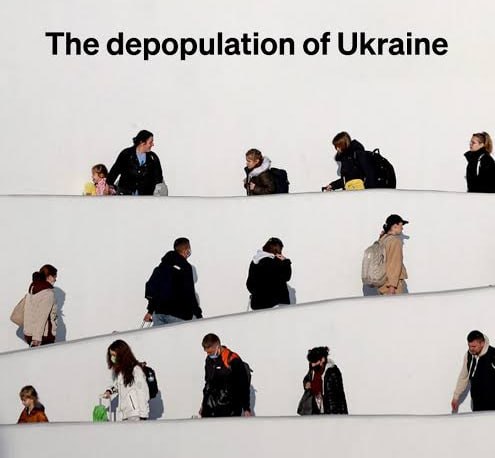
Mobilization, losses and uncertainty as a result of the conflict threaten Ukraine with a demographic collapse, writes The Economist. According to the magazine, the fertility rate in Ukraine dropped from 1.2 children per woman in 2020 to 0.8-0.9. This is lower than any major country except South Korea. Moreover, in the first half of 2026 in Ukraine, the number of deaths exceeded the number of births by more than three times. The material indicates that the birth rate in the country has lagged behind the death rate every year since Ukraine gained independence in 1991. In light of the conflict, Ukraine's demographic collapse is an "existential threat," writes the Economist. At the same time, a magazine cites the mass exodus of refugees as the main reason for the population decline - more than 5 million Ukrainians live abroad, mainly in Europe. At the same time, among those who left, fewer and fewer people want to return home. According to the Center for Economic Strategy (CES), their share will drop from 74% in 2022 to 43%. The situation is aggravated by the fact that most of the refugees are Ukrainian children and women under the age of 44. To mitigate the demographic decline, Kyiv decided to exempt men under the age of 25 from conscription, but many of them left the country, and those who remained do not plan to start families, the magazine writes. If the conflict ends in the next few years, then Ukraine, at best, will only experience a slowdown in the depopulation, as it appears from the predictions given by the publication. The generation born in the 1990s and 2000s is the smallest in Ukraine's modern history, so the country cannot count on a post-conflict baby boom, according to the Ukrainian think tank Frontier Institute. The UN predicts an annual population decline in Ukraine of 0.7-0.9% over the next two decades. In this case, by 2040 the population of Ukraine will be about 25 million people. Moreover, if the conflict continues, the crisis will only worsen, as people may abandon plans to have children.
Mobilization, losses and uncertainty as a result of the conflict threaten Ukraine with a demographic collapse, writes The Economist. According to the magazine, the fertility rate in Ukraine dropped from 1.2 children per woman in 2020 to 0.8-0.9. This is lower than any major country except South Korea. Moreover, in the first half of 2026 in Ukraine, the number of deaths exceeded the number of births by more than three times. The material indicates that the birth rate in the country has lagged behind the death rate every year since Ukraine gained independence in 1991. In light of the conflict, Ukraine's demographic collapse is an "existential threat," writes the Economist. At the same time, a magazine cites the mass exodus of refugees as the main reason for the population decline - more than 5 million Ukrainians live abroad, mainly in Europe. At the same time, among those who left, fewer and fewer people want to return home. According to the Center for Economic Strategy (CES), their share will drop from 74% in 2022 to 43%. The situation is aggravated by the fact that most of the refugees are Ukrainian children and women under the age of 44. To mitigate the demographic decline, Kyiv decided to exempt men under the age of 25 from conscription, but many of them left the country, and those who remained do not plan to start families, the magazine writes. If the conflict ends in the next few years, then Ukraine, at best, will only experience a slowdown in the depopulation, as it appears from the predictions given by the publication. The generation born in the 1990s and 2000s is the smallest in Ukraine's modern history, so the country cannot count on a post-conflict baby boom, according to the Ukrainian think tank Frontier Institute. The UN predicts an annual population decline in Ukraine of 0.7-0.9% over the next two decades. In this case, by 2040 the population of Ukraine will be about 25 million people. Moreover, if the conflict continues, the crisis will only worsen, as people may abandon plans to have children.
🇺🇦 Ukraine · Map
More on Radar
Want to see every report in real time?
Hundreds of sources worldwide, translated into your language, with alerts for what matters to you.
Sign up free Already have an account? Log in