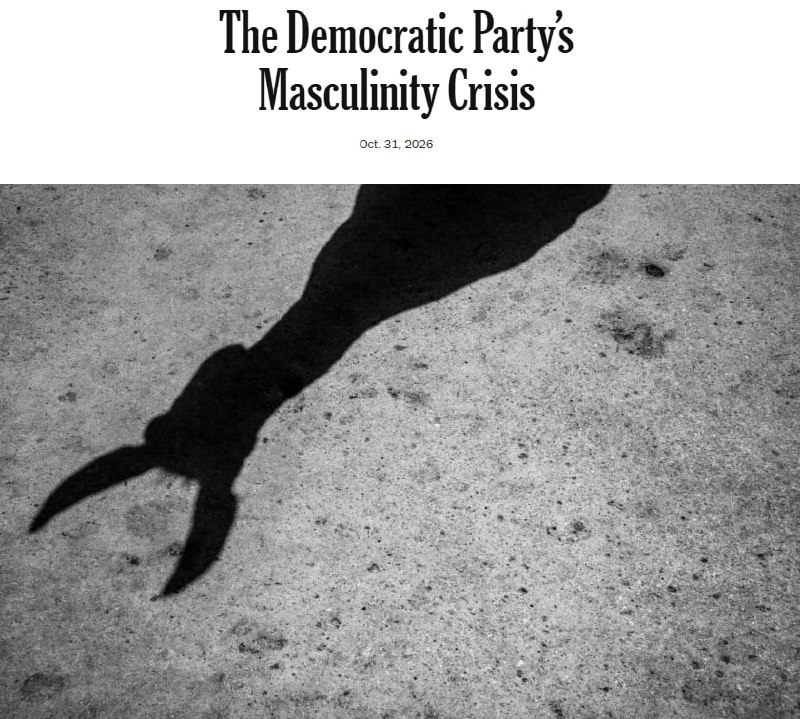
The US Democratic Party is facing a crisis of masculinity amid the growing popularity of the aggressive image of political leadership associated with Republicans and President Donald Trump. Journalist Mike Mariani writes about this in a column for The New York Times, based on conversations with more than 20 scientists, strategists, and pollsters. According to the author, Democrats are trying to find an image of a strong male politician that will meet changing public expectations without contradicting the party's progressive principles. As early as 2020, Mariani notes, Democrats relied on restraint, decency, and kindness. However, in recent years, a different ideal has taken hold in American politics—an aggressive leader who demonstrates strength and a readiness for constant confrontation. Among its representatives, the journalist notes Secretary of Defense Pete Hegseth, Secretary of Health Robert F. Kennedy Jr., and billionaire Elon Musk. Professor Mirya Holman of the University of Houston believes Trump's rise to power has changed ideas about masculinity in politics. She said the Republican Party has come to be seen as a place where a strong man can come from the outside and seize power. Democrats are responding to this change in various ways, the publication notes. Thus, Senators Jon Ossoff and Chris Murphy have stepped up their criticism of Trump and the Republicans. California Governor Gavin Newsom has begun adopting the aggressive messaging of the right, including on social media, in an attempt to appeal to an audience of young male voters. Other candidates rely on physical strength, independence, and populist rhetoric. Thus, a candidate for the Senate seat from Michigan, Abdul El-Sayed, emphasizes the image of a fighter against political elites, and Texas Democrat James Talarico combines Christian values with criticism of corruption and wealth inequality.
The US Democratic Party is facing a crisis of masculinity amid the growing popularity of the aggressive image of political leadership associated with Republicans and President Donald Trump. Journalist Mike Mariani writes about this in a column for The New York Times, based on conversations with more than 20 scientists, strategists, and pollsters. According to the author, Democrats are trying to find an image of a strong male politician that will meet changing public expectations without contradicting the party's progressive principles. As early as 2020, Mariani notes, Democrats relied on restraint, decency, and kindness. However, in recent years, a different ideal has taken hold in American politics—an aggressive leader who demonstrates strength and a readiness for constant confrontation. Among its representatives, the journalist notes Secretary of Defense Pete Hegseth, Secretary of Health Robert F. Kennedy Jr., and billionaire Elon Musk. Professor Mirya Holman of the University of Houston believes Trump's rise to power has changed ideas about masculinity in politics. She said the Republican Party has come to be seen as a place where a strong man can come from the outside and seize power. Democrats are responding to this change in various ways, the publication notes. Thus, Senators Jon Ossoff and Chris Murphy have stepped up their criticism of Trump and the Republicans. California Governor Gavin Newsom has begun adopting the aggressive messaging of the right, including on social media, in an attempt to appeal to an audience of young male voters. Other candidates rely on physical strength, independence, and populist rhetoric. Thus, a candidate for the Senate seat from Michigan, Abdul El-Sayed, emphasizes the image of a fighter against political elites, and Texas Democrat James Talarico combines Christian values with criticism of corruption and wealth inequality.
🇺🇸 USA · Map
More on Radar
Want to see every report in real time?
Hundreds of sources worldwide, translated into your language, with alerts for what matters to you.
Sign up free Already have an account? Log in