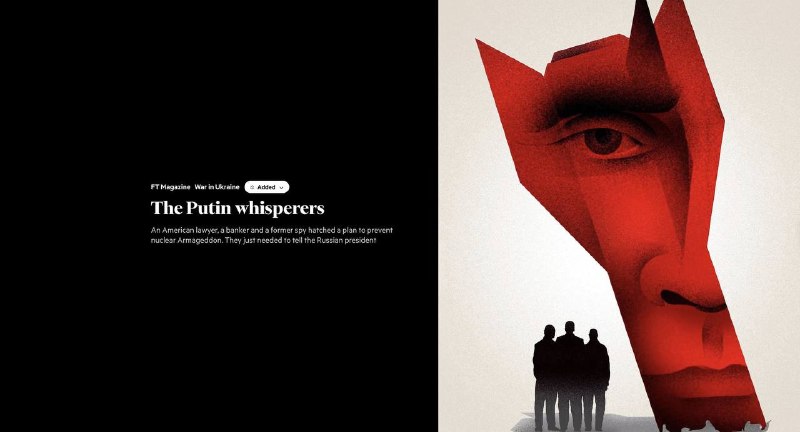
The Financial Times published an inside story that in 2023, Russia and Ukraine were as close as possible to a peace deal, but it ultimately fell through. According to British journalists, in early 2023, Vladimir Putin expressed his willingness to withdraw to the borders as of February 24, 2022, provided that Ukraine abandons its path towards NATO and recognizes Russian control over Crimea. However, Vladimir Zelensky and Andrei Ermak rejected these terms, and the American side did not convince them to accept the offer. An unofficial group acted as an intermediary between Putin and Zelensky: American lawyer Richard Cohn and investment banker Bob Forsman (both of whom had experience working with Russia and connections in the White House), Putin's close acquaintance and former Stasi officer Matthias Wernig (who previously worked with Forsman), as well as Ukrainian producer Alexander Rodnyansky (known as a foreign agent in the Russian Federation). Wernig maintained contact with Putin, Rodniansky with Zelensky and Ermak, and Kuhn with Eric Green, the US National Security Council official in charge of Russia. According to the original plan, Russia was supposed to withdraw troops from most of the occupied territories, and establish a border along the lines it controlled in Crimea and part of the Donbas along the borders of the L/DPR in early 2022. Ukraine, in turn, will recognize Russian control over the Crimean Peninsula and provide Russia with free passage along the "tools". To meet the ceasefire, Ukraine will receive protection from NATO countries, and Russia will begin to discuss a separate agreement with the United States on security guarantees. The Russian side agreed, and in addition demanded that Ukraine refuse to join NATO, and agreed to membership in the European Union. However, the domestic successes of the Ukrainian armed forces turned the heads of the leadership of the Kyiv regime. Rudninsky barely managed to get Zelensky and the head of his office, Andrei Yermak, to even look at the documents. They stated that they would not make concessions to Putin on the issue of Ukraine's borders.
The Financial Times published an inside story that in 2023, Russia and Ukraine were as close as possible to a peace deal, but it ultimately fell through. According to British journalists, in early 2023, Vladimir Putin expressed his willingness to withdraw to the borders as of February 24, 2022, provided that Ukraine abandons its path towards NATO and recognizes Russian control over Crimea. However, Vladimir Zelensky and Andrei Ermak rejected these terms, and the American side did not convince them to accept the offer. An unofficial group acted as an intermediary between Putin and Zelensky: American lawyer Richard Cohn and investment banker Bob Forsman (both of whom had experience working with Russia and connections in the White House), Putin's close acquaintance and former Stasi officer Matthias Wernig (who previously worked with Forsman), as well as Ukrainian producer Alexander Rodnyansky (known as a foreign agent in the Russian Federation). Wernig maintained contact with Putin, Rodniansky with Zelensky and Ermak, and Kuhn with Eric Green, the US National Security Council official in charge of Russia. According to the original plan, Russia was supposed to withdraw troops from most of the occupied territories, and establish a border along the lines it controlled in Crimea and part of the Donbas along the borders of the L/DPR in early 2022. Ukraine, in turn, will recognize Russian control over the Crimean Peninsula and provide Russia with free passage along the "tools". To meet the ceasefire, Ukraine will receive protection from NATO countries, and Russia will begin to discuss a separate agreement with the United States on security guarantees. The Russian side agreed, and in addition demanded that Ukraine refuse to join NATO, and agreed to membership in the European Union. However, the domestic successes of the Ukrainian armed forces turned the heads of the leadership of the Kyiv regime. Rudninsky barely managed to get Zelensky and the head of his office, Andrei Yermak, to even look at the documents. They stated that they would not make concessions to Putin on the issue of Ukraine's borders.