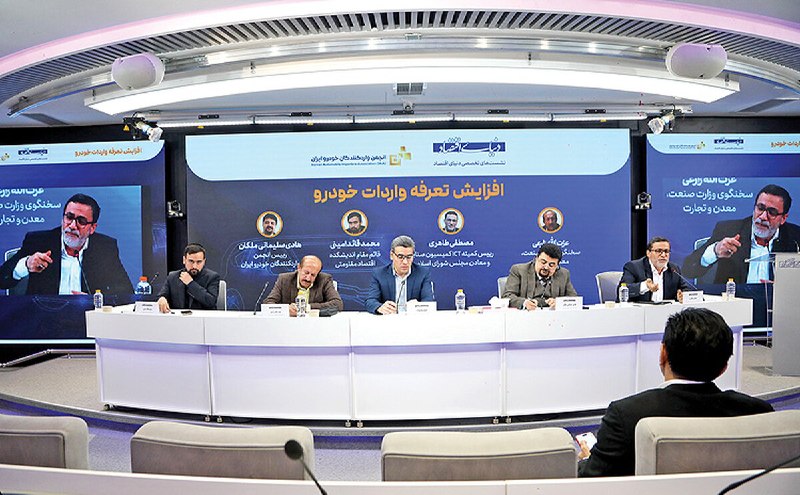
Multiple voices in car import policy / Implications of 100% customs duty on foreign car imports.
"Economic World":
The increase in the import tariff for gasoline cars and hybrid cars to 100% was the point of contention at the round table of the "Economic World", the PRF, the Ministry of Defense, the Automobile Importers Association and the Resistance Economy think tank. Mustafa Tehri, a member of parliament, saw this decision as having price implications for consumers and said that he would continue to correct it. Aztula Zerai, spokesman for the Ministry of Defense, defended the tiered tariffs, which he said were proposed to support production, regulate the market and facilitate the entry of economic vehicles. Hadi Soleimani Malkan, the representative of the car importers, also referred to the inconsistency between decision-making institutions and changes in regulation as a cause of instability in the market and the weakening of the confidence of economic operators. This section also dealt with the status of the cars remaining at customs and the validity of section "R", which is a matter of dispute. There were different opinions about the origin of the imported currency. Tahari said that the currency received from exports is also part of the state's resources, and importing used cars can meet the needs of the market with less currency. The spokesman for the Ministry of Defense talked about the use of tools such as "own deposits and those of others" to reduce the pressure on foreign exchange resources and to prioritize production. The head of the importers union claimed that the local currency was not used in imports and saw that the import restrictions do not match the gap between production and demand for cars. Mohammed Quaid Amini, vice president of the Resistance Economy think tank, also emphasized the difficulty of monitoring the unofficial channels of currency transfer and the importance of investigating the fate of riyals obtained from the sale of cars. Regarding the registration of car import orders on the commodity exchange, Quaid Amini saw a way to manage the pressure on the Ministry of Defense and the Central Bank. Tahri said that this proposal was made to control the profits caused by the lack of supply and return part of it to the government, but he does not agree with it. The spokesman for the Ministry of Defense also emphasized that the registration to the stock exchange should not become an administrative process and paperwork. Full text.