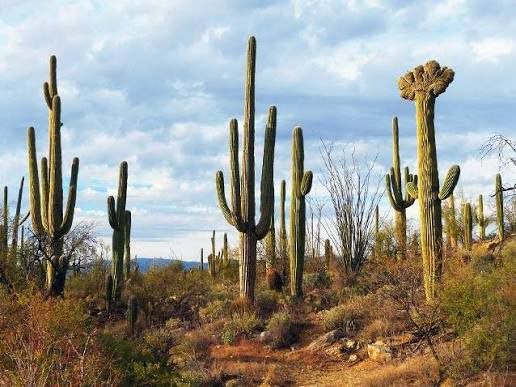
On the other side of the news, even desert cacti don't survive the heat!
You've probably seen the saguaro cactus in the Hollywood West movies; Those huge cacti that look like a man with open arms and have become a symbol of the American West. Some of them live more than 150 years and their height reaches 12 meters.
But now even this symbol of resistance to drought and heat is giving up.
An investigative report by Reuters shows that long and intense heat waves, especially hot nights, threaten the survival of this plant.
What do the statistics say?
Before 2020, about 1-2% of saguaro cacti were lost each year for various reasons.
In Phoenix, Arizona, heat-attributable deaths reached 7% in 2023; Now it's about 4 to 5 percent.
In the summer of 2023, Phoenix experienced 31 consecutive days of temperatures above 43 degrees Celsius.
The main enemy may not be the sun; The nights are warm!
Here's the weird part: to survive the heat of the day, the cacti shifted part of the photosynthesis process to the night. At night, when the air cools, the small pores of the plant open and absorb carbon dioxide to use for food production the next day.
But when the temperature stays close to 30 degrees or more at night, this process is disrupted. The cactus produces less food and loses more water.
To give you an idea of the changes, the Phoenix area only had nine nights with temperatures above 30 degrees in the entire 60s; But in the current decade, the number of these nights exceeded 175 nights!
It's not just cacti.
In the same study, Reuters also says about the damage to other species:
In America's Mojave Desert, a survey of 135 bird species showed that the areas studied had lost more than 40% of their bird species on average.
In the Kalahari desert in Africa, the number of heat wave and "heat storm" days has increased eightfold since the 1960s; An issue that threatens the growth and survival of baby meerkats.
What is a "heat storm" anyway?