An erosion trap in the Persian Gulf.
Jaffery deficit.
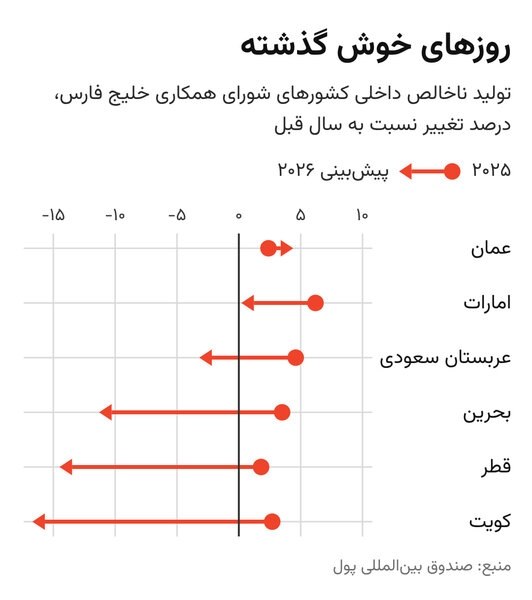
In the last half century, global crises have often become an opportunity for the economic boom of the Persian Gulf countries; But this time, the war and insecurity in the region upset that equation.
Despite the relative return of tourists and the resumption of some activities, signs of disruption are still severe: Emirates Airlines passenger numbers are down 22 percent and Dubai hotel occupancy is 15 to 20 percentage points below normal.
The movement of container ships through the Strait of Hormuz decreased from about 20 ships a day to at least one ship. The lack of goods, the increase in transportation costs and the suspension of some construction projects intensified the pressure on the region's economy.
Estimates show that the aggregate budget deficit of the Persian Gulf countries may reach 475 billion dollars between 2026 and 2030. Meanwhile, more vulnerable countries like Bahrain will need financial support from their wealthier neighbors than others.
On the one hand, the countries of the region want to prevent the renewal of the war, and on the other hand, they are divided about how to deal with Iran and the degree of pressure on Tehran. The continuation of this situation can divert their financial resources from development programs to defense and security expenditures.
Can the rich countries of the Persian Gulf survive this war of attrition, or will their ambitious economic dreams fade under the pressure of uncertainty and budget deficit?
Details of the report on the World Economy website.
The official channel of Donya Akhtaz newspaper.