The long-term consequences of increasing the bond issue and reducing the construction budget.
The increase in current costs and a 33% decrease in construction costs.
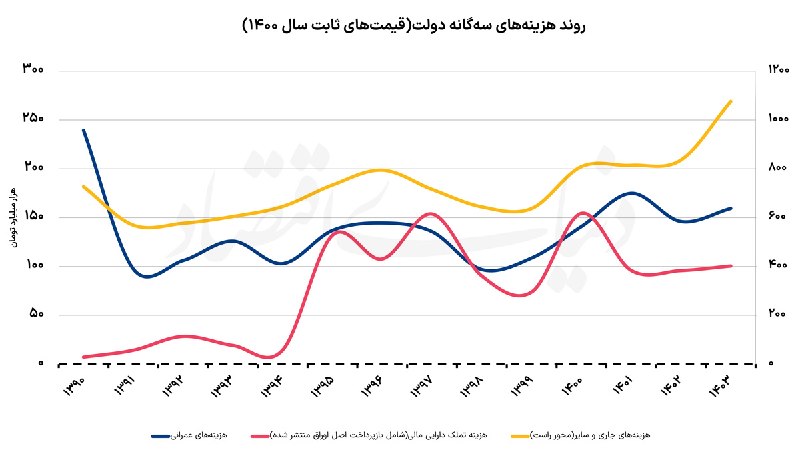
Examining the performance of the government budget between the years 1390-1403 shows that despite a 37% increase in all budget resources (at constant prices), construction expenses decreased by 33%, while current expenses grew by 48%.
The increase in current expenses is due to the pension funds' dependence on the budget and bond interest payments, and the transfer rate of financial assets (loans) increased from 5 to 32 percent.
This change in composition puts pressure on the government's financial situation from two directions: first, reducing investment in construction by limiting infrastructure development weakens the ability to generate tax revenues; Second, increased borrowing means heavier repayment obligations in the coming years.
The root of this situation lies in the structural imbalance of the budget, the stickiness of current expenses and dependence on fluctuating oil revenues.
In 1403, public revenues covered only about 56% of current expenses, and the decrease in oil revenues mainly resulted in a decrease in construction expenses and an increase in loans.
The continuation of this trend will trap the budget in an abrasive cycle of accrued liabilities and reduced investment, which requires matching current expenses with stable income and protection of construction investments.
The official channel of Donya Akhtaz newspaper.