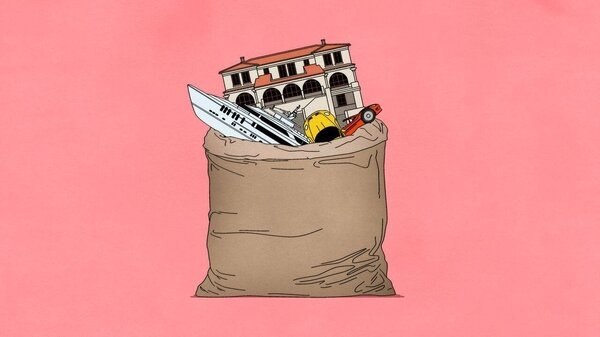
The return of the confiscating governments.
Asset confiscation has once again become a tool for exercising the power of governments. The Economist, in a report citing Nicholas Mulder's new book, shows that the confiscation of enemy property has a long history.
During World War I, the United States and Great Britain confiscated the assets of German citizens and companies and used them to finance the war. This policy has intensified again in recent years.
After the Russian attack on Ukraine, the Western countries blocked about 300 billion dollars from the reserves of the Russian central bank. Also, the assets of several Russian oligarchs were confiscated. However, the dispute over the final confiscation of these assets continues; Because such an action could weaken investors' confidence in the European legal system.
But confiscation is not limited to the West. In response to the actions of the West, Russia took over foreign companies. Some African governments have also taken over mines owned by Western companies. The US also seized Venezuelan oil tankers and threatened the Panama Canal and Greenland.
The author of the book believes that the peaceful era of globalization and widespread respect for foreign property ownership was only a historical exception. Now, with the spread of economic wars and political tensions, foreign assets are more at risk than before. The central question is whether property rights can survive the expropriation return policy.
Details of the report on the World Economy website.
The official channel of Donya Akhtaz newspaper.