The war and the security restructuring of the Persian Gulf.
Ceramic vault.
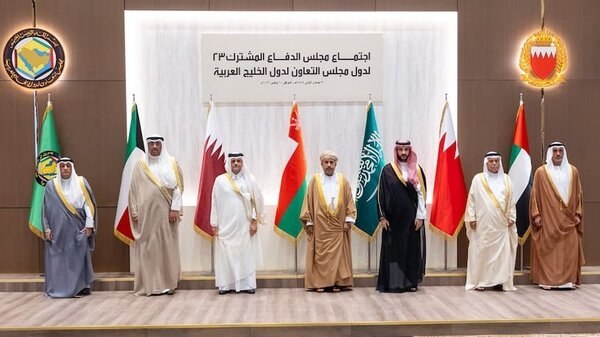
The Persian Gulf Cooperation Council's decision on Tuesday to establish a joint advanced military command headquarters in Kuwait should be read in the context of a broader review of this complex in the region's post-war security relations.
The war against Iran revealed to the Arab capitals the fact that advanced weapons and the establishment of military bases by foreign powers do not necessarily mean a guarantee of security.
Missile and UAV attacks have made the vulnerability of energy infrastructures, ports, airports and sea lanes a common problem for the countries of the region. In such a situation, the main issue is not only increasing weapons purchases, but how to connect the national defense capabilities to each other and create a coordinated response.
Mehnad Salom, a researcher at the World Middle East Council, believes that the establishment of a unified command in Kuwait, in addition to sending a message of deterrence, is a sign of the desire of Arab countries in the Persian Gulf to have a more independent ability to deal with future security scenarios.
Among this, there is one point, strengthening the security cooperation of Arab countries does not mean establishing an offensive coalition against Tehran. It can even be said that it is possible to follow these two paths, that is, increasing the defense capacity and expanding the political dialogues with Iran, at the same time.
Details of the report on the World Economy website.
The official channel of Donya Akhtaz newspaper.