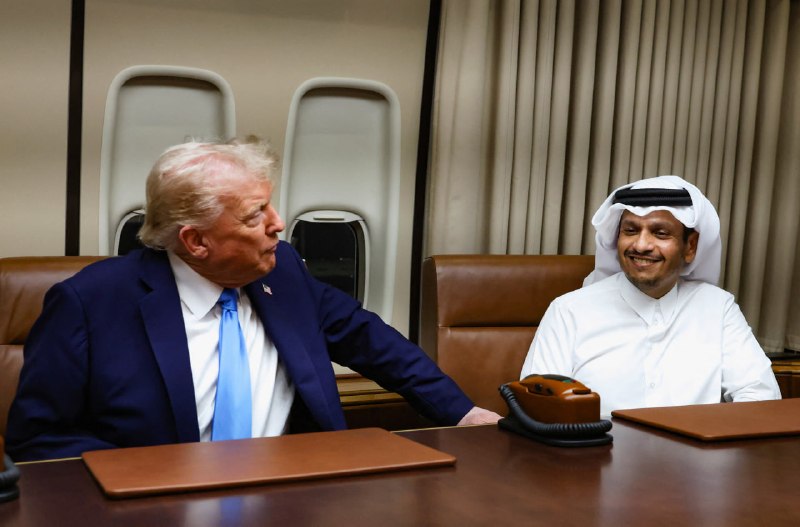
On the other side of the news, Qatar is between Tehran and Washington; Can the two-day plan end the war?
Amid military threats and deadlocked negotiations, a regional player has re-entered the fray: Qatar. After his visit to Tehran, the Prime Minister of this country went to the White House today to talk with Donald Trump and J. Dee Vance on the end of the war and the resumption of nuclear negotiations.
But can diplomacy replace war this time?
Where did the story begin?
In recent weeks, Qatar has assumed the role of mediator between Tehran and Washington and conveyed the messages and proposals of both sides. A two-day proposal brokered by Qatar and the cooperation of several regional countries is now on the agenda.
According to the details published by Axios, the proposed framework is as follows:
1 Day 1: America must end the naval blockade of Iran's ports and release some of Iran's blocked assets; In return, Iran should invite the International Atomic Energy Agency to inspect the damaged nuclear facilities.
2 Day 2: The Strait of Hormuz must be reopened and then the nuclear negotiations must be resumed, especially regarding Iran's enriched uranium reserves.
This is of course a proposed framework, not an agreement that both parties accepted.
What does Tehran want?
Iran says the US naval blockade must end, sanctions must be lifted, and the war must stop on all fronts before negotiations begin. The release of the blocked assets and the reduction of the US military presence in the region are among Tehran's demands.
Al Jazeera Reuters.
What is Washington's response?
Marco Rubio, the US Secretary of State, called Iran's conditions unrealistic and said that the negotiations have not yet reached a point close to an agreement.
However, Trump has a double position: on the one hand, he said that he does not seek to escalate the war, and if a strong agreement is reached, the probability of new attacks will be very low; On the other hand, he warned against the new US military goals in Iran.
Associated Press.
Why is this meeting important?
Because the issue is not just stopping the war; The Strait of Hormuz is one of the world's most vital energy bottlenecks. Before the war, about a fifth of the world's oil passed through this route.