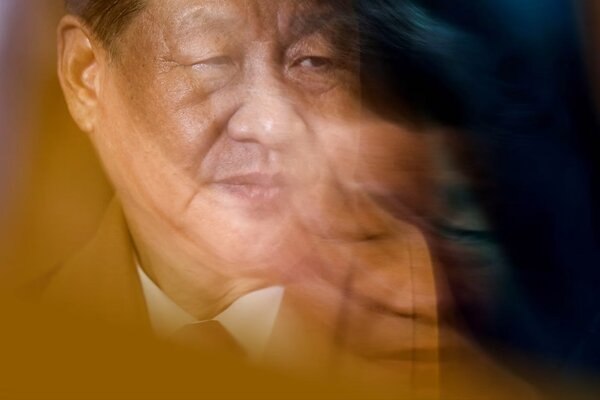
The Consequences of Xi Jinping's Great Purge in China Jaffery Deficit Empty seats in Beijing's official halls these days describe the inner reality of power in China more than any impassioned speech. The sudden absence of well-known technocrats at the university conferences and the fact that about a quarter of the Communist Party Central Committee seats were left empty at the last meeting all tell the same story. On the eve of his fourth term as leader, Xi Jinping has ushered in the biggest wave of political cleansing in China since the Mao Zedong era. What started fourteen years ago as an anti-corruption and "tiger hunting" campaign has now become a permanent policy of "self-improvement" for the party. This sharp blade has so far punished more than seven million party members and hundreds of senior political officials and senior military commanders and brought more than 600,000 people to court. In this new order, political loyalty and pure obedience are the only criteria for staying in power. It has reached the point where veteran military commanders are replaced by political commissars and diplomats and economic elites are removed from power overnight. However, such iron discipline took a heavy toll on the governance of the world's second-largest economy, and the heavy shadow of fear led the Chinese administrative apparatus to passivity and conservatism. Caught between the financial crisis caused by the housing stagnation and Beijing's disciplinary pressures, the local managers, fearing to file a lawsuit against their competitors and accusations of corruption, do not take the risk of making major economic decisions and have begun to build demonstrative and official projects to please their superiors. Greater damage occurs when the fear of expressing a bitter reality places the head of the power pyramid within the fence of selective and pleasant reports. The incessant purges and the prioritization of political control to eliminate "two-headed managers" may lock the wheel of economic decision-making in local governments. Despite this risk, China's leader continues to insist on prescribing a higher dose of the same drug as before to treat the crisis. Details of the report on the channel's global economy website.
The Consequences of Xi Jinping's Great Purge in China Jaffery Deficit Empty seats in Beijing's official halls these days describe the inner reality of power in China more than any impassioned speech. The sudden absence of well-known technocrats at the university conferences and the fact that about a quarter of the Communist Party Central Committee seats were left empty at the last meeting all tell the same story. On the eve of his fourth term as leader, Xi Jinping has ushered in the biggest wave of political cleansing in China since the Mao Zedong era. What started fourteen years ago as an anti-corruption and "tiger hunting" campaign has now become a permanent policy of "self-improvement" for the party. This sharp blade has so far punished more than seven million party members and hundreds of senior political officials and senior military commanders and brought more than 600,000 people to court. In this new order, political loyalty and pure obedience are the only criteria for staying in power. It has reached the point where veteran military commanders are replaced by political commissars and diplomats and economic elites are removed from power overnight. However, such iron discipline took a heavy toll on the governance of the world's second-largest economy, and the heavy shadow of fear led the Chinese administrative apparatus to passivity and conservatism. Caught between the financial crisis caused by the housing stagnation and Beijing's disciplinary pressures, the local managers, fearing to file a lawsuit against their competitors and accusations of corruption, do not take the risk of making major economic decisions and have begun to build demonstrative and official projects to please their superiors. Greater damage occurs when the fear of expressing a bitter reality places the head of the power pyramid within the fence of selective and pleasant reports. The incessant purges and the prioritization of political control to eliminate "two-headed managers" may lock the wheel of economic decision-making in local governments. Despite this risk, China's leader continues to insist on prescribing a higher dose of the same drug as before to treat the crisis. Details of the report on the channel's global economy website.
🇨🇳 China · Map
More on Radar
Want to see every report in real time?
Hundreds of sources worldwide, translated into your language, with alerts for what matters to you.
Sign up free Already have an account? Log in