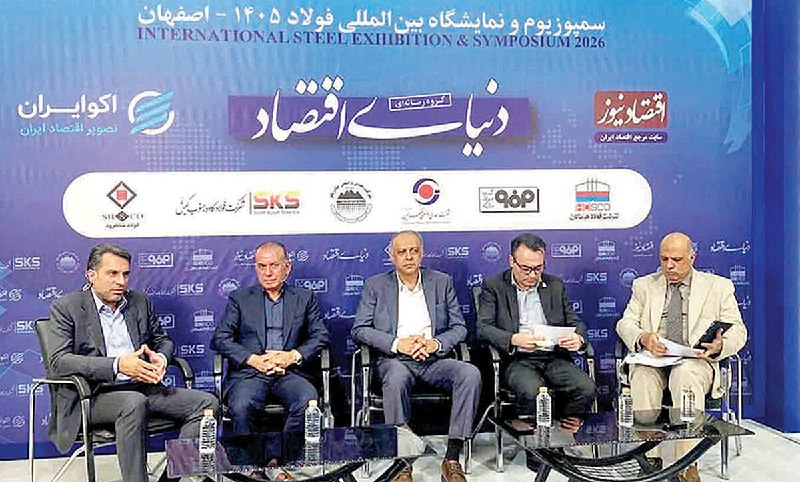
New comparisons of steel in the era of uncertainty Iran's steel industry, which has a nominal capacity of 55 million tons, currently operates with an actual production of about 32 million tons due to energy constraints, infrastructural mismatches and geopolitical challenges. In the special panel "High Risk Steel Winter" at the Isfaya Steel Symposium 1405, experts emphasized the need to stop developing new capabilities and focus on eliminating the energy deficit and optimizing consumption. About 20% of the gap between nominal capacity and actual production is caused by energy limitations. Experts also pointed out the inappropriate location of some of the units without considering the water resources, the multiple growth of energy prices in parallel with the mandatory pricing, and the need to reform the electricity and gas allocation mechanism instead of percentage allocations. On the other hand, the electricity industry faces an annual need of 10 billion dollars for investment and a serious financial imbalance, and transferring the responsibility for the supply of energy to the industries is not a sustainable solution to overcome the crisis. Full text Read more: The complex equation of steel trade This report examines the challenges and solutions of the steel industry in the new geopolitical order. Managers and senior experts in this field consider problems such as damage to infrastructure, restrictions on maritime transport, energy imbalances, binding foreign exchange policies and obstacles to the return of export currency as the most important obstacles to production and exports. Also, the need to change the export strategy towards products with high added value, removing internal barriers and determining fair pricing for all links of the chain is emphasized. Erosion of the development potential of the steel industry This report deals with investment and financing challenges in the steel industry. Experts consider factors such as high financing rates, inflation, currency and price interventions, mismatch between infrastructures and limited communication with global markets as the main obstacles to the development of this industry. Also, the need for stability in policy-making, reform of currency and pricing policy, reducing government intervention and increasing the productivity of companies was emphasized. the channel.
New comparisons of steel in the era of uncertainty Iran's steel industry, which has a nominal capacity of 55 million tons, currently operates with an actual production of about 32 million tons due to energy constraints, infrastructural mismatches and geopolitical challenges. In the special panel "High Risk Steel Winter" at the Isfaya Steel Symposium 1405, experts emphasized the need to stop developing new capabilities and focus on eliminating the energy deficit and optimizing consumption. About 20% of the gap between nominal capacity and actual production is caused by energy limitations. Experts also pointed out the inappropriate location of some of the units without considering the water resources, the multiple growth of energy prices in parallel with the mandatory pricing, and the need to reform the electricity and gas allocation mechanism instead of percentage allocations. On the other hand, the electricity industry faces an annual need of 10 billion dollars for investment and a serious financial imbalance, and transferring the responsibility for the supply of energy to the industries is not a sustainable solution to overcome the crisis. Full text Read more: The complex equation of steel trade This report examines the challenges and solutions of the steel industry in the new geopolitical order. Managers and senior experts in this field consider problems such as damage to infrastructure, restrictions on maritime transport, energy imbalances, binding foreign exchange policies and obstacles to the return of export currency as the most important obstacles to production and exports. Also, the need to change the export strategy towards products with high added value, removing internal barriers and determining fair pricing for all links of the chain is emphasized. Erosion of the development potential of the steel industry This report deals with investment and financing challenges in the steel industry. Experts consider factors such as high financing rates, inflation, currency and price interventions, mismatch between infrastructures and limited communication with global markets as the main obstacles to the development of this industry. Also, the need for stability in policy-making, reform of currency and pricing policy, reducing government intervention and increasing the productivity of companies was emphasized. the channel.
🇮🇷 Iran · Map
More on Radar
Want to see every report in real time?
Hundreds of sources worldwide, translated into your language, with alerts for what matters to you.
Sign up free Already have an account? Log in