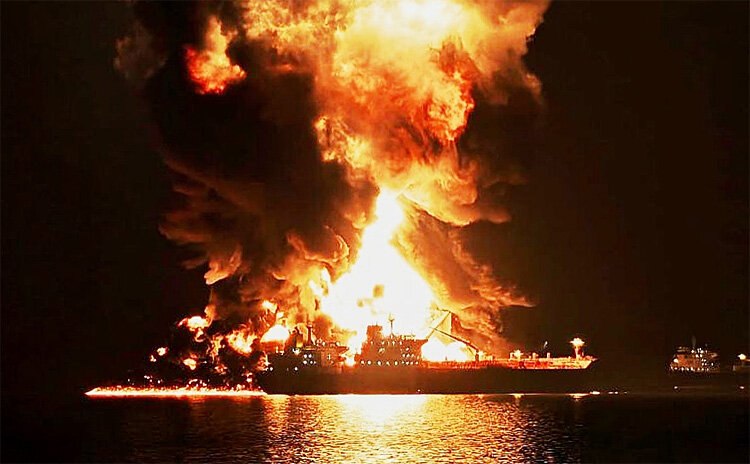
Why do ships still go to the Persian Gulf despite the increase in attacks? October 2026 was the worst month for shipping in the Strait of Hormuz with 28 confirmed or reported attacks; The number of attacks since the beginning of the war reached 113 cases; That is, about a quarter of all attacks in the last eight months occurred in one month, and the monthly rate is almost twice the average of the war. More than 30 Aberjol tankers (about 3.5% of the world fleet) were damaged; However, ship owners are more willing to load within the Persian Gulf; Because the daily rent has exceeded $1 million and the region's producers are giving more discounts than historical Brent oil. This means that the market has set a price for risk. When you price the risk, some people will buy it. These discounts are in fact a war tax on exports, which turns into the income of the Arab countries in the Persian Gulf and the profits of the refineries in Asia. According to Noam Raiden, a senior researcher at the Washington Institute for Near East Policy, Tehran's goal is not to close the strait; Rather, it is to apply targeted pressure to slow the return of exports and influence the US midterm elections in November without provoking a widespread military response. Meanwhile, China has accelerated the development of domestic production and strategic oil and gas reserves to reduce its vulnerability. Three scenarios are expected for the future: 1) a decrease in terrorist attacks after the American elections, 2) the normalization of violence and the stabilization of the "risk economy" with fixed rates and discounts, and 3) the occurrence of a major accident (oil spill or heavy casualties) that destroys the insurance coverage. These developments also have consequences such as removing repair ships from circulation, hidden income transfers and many unreported attacks. Full text of the channel.
Why do ships still go to the Persian Gulf despite the increase in attacks? October 2026 was the worst month for shipping in the Strait of Hormuz with 28 confirmed or reported attacks; The number of attacks since the beginning of the war reached 113 cases; That is, about a quarter of all attacks in the last eight months occurred in one month, and the monthly rate is almost twice the average of the war. More than 30 Aberjol tankers (about 3.5% of the world fleet) were damaged; However, ship owners are more willing to load within the Persian Gulf; Because the daily rent has exceeded $1 million and the region's producers are giving more discounts than historical Brent oil. This means that the market has set a price for risk. When you price the risk, some people will buy it. These discounts are in fact a war tax on exports, which turns into the income of the Arab countries in the Persian Gulf and the profits of the refineries in Asia. According to Noam Raiden, a senior researcher at the Washington Institute for Near East Policy, Tehran's goal is not to close the strait; Rather, it is to apply targeted pressure to slow the return of exports and influence the US midterm elections in November without provoking a widespread military response. Meanwhile, China has accelerated the development of domestic production and strategic oil and gas reserves to reduce its vulnerability. Three scenarios are expected for the future: 1) a decrease in terrorist attacks after the American elections, 2) the normalization of violence and the stabilization of the "risk economy" with fixed rates and discounts, and 3) the occurrence of a major accident (oil spill or heavy casualties) that destroys the insurance coverage. These developments also have consequences such as removing repair ships from circulation, hidden income transfers and many unreported attacks. Full text of the channel.