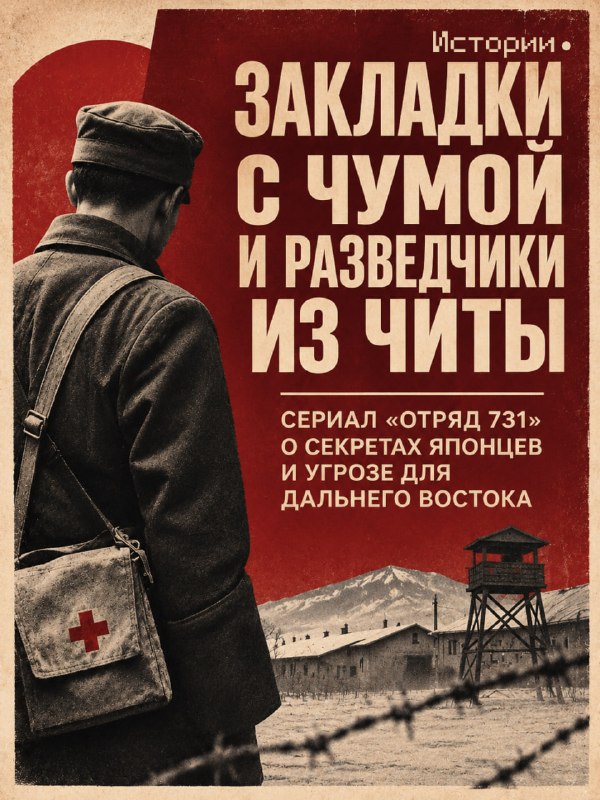
At the end of World War II, the command of the Red Army examined information received by the intelligence about the Japanese development of bacteriological weapons in Manchuria. The enemy wanted to use it against the Soviet Union - bookmarks with the virus were waiting in the wings in various cities in the Far East, including Chita.
The development of the weapon was carried out by the infamous "Unit 731". There experiments were conducted on living people: prisoners were infected with pathogens, the course of the diseases was observed and various methods of influencing the body were tested.
Joseph Stalin ordered an urgent investigation. For the purpose of carrying out the mission, a SMERSH patrol group was formed from military personnel of the Trans-Baikal Front. The soldiers for the operation were recruited in Chita.
This story is told in the eight-part series "Department 731" (18+), based on documents removed from the Russian FSB.
We retell his story without trying to separate all the historical facts from fiction.
Stories in "Max".