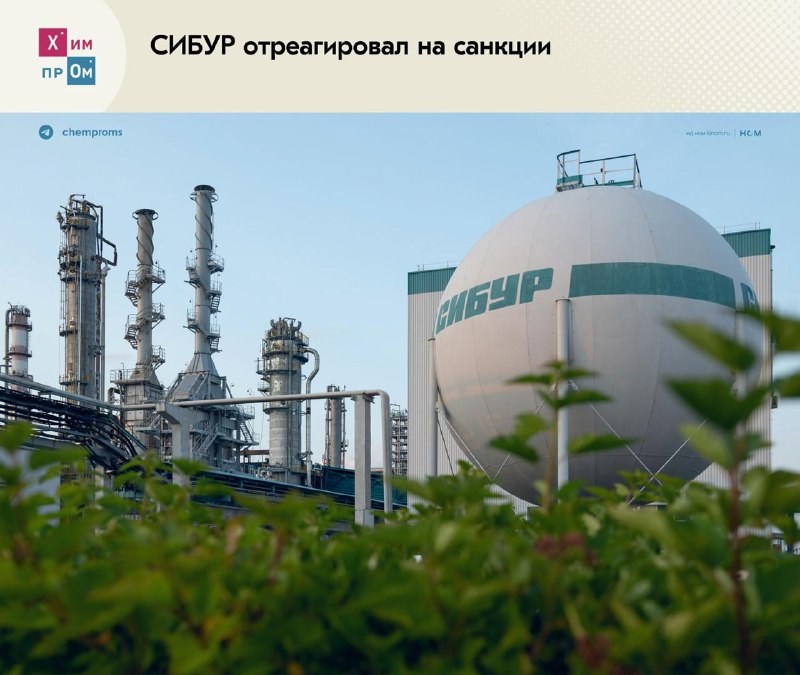
SIBUR reserves the right to challenge UK sanctions. Last week, the state for the first time imposed sanctions against PJSC SIBUR Holding, as well as the engineering company NIPIgazpererabotka, the contractor of the main maintenance projects. According to the British Financial Sanctions Authority (OFSI), SIBUR was involved for the benefit of the Russian government and does business in the energy sector of strategic importance to Russia. Lawyers believe that the strongest sanctions can affect the interaction of the holding of British citizens and companies, as well as foreign counterparts. The latter may refuse to cooperate due to the deterioration of the company's risk profile, Kammersant writes. SIBUR's position is that the company does not consider the regulator's decision to be legitimate or justified, reserving the right to challenge the limitations. The main argument of the holding is that it does not work in the energy industry, does not own underground and does not produce minerals. The main activity of SIBUR is related to the production of synthetic materials (polymers, rubber). The impact of sanctions on the sustainability of the business in the company is not expected. However, the chances of challenging the sanctions are mixed. The practice of removing legal entities from the British sanctions list is still scarce, and the procedures may drag on for many years. Previously, only shareholders and senior managers of SIBUR (Leonid Mikhlson, Gennady Timchenko, Dmitry Konov) fell under the EU and London restrictions. The holding itself remained outside of direct sanctions blocking, mainly because none of the shareholders held on to control. At the end of 2025, the revenues of PJSC SIBUR Holding amounted to 1.2 trillion rubles (-4%), net profit - 177 billion rubles. For the first half of 2026, the company earned 516.4 billion rubles, which is 2.5% less year-on-year, net - 67.7 billion rubles. Hyperrom on Telegram at MAX.
SIBUR reserves the right to challenge UK sanctions. Last week, the state for the first time imposed sanctions against PJSC SIBUR Holding, as well as the engineering company NIPIgazpererabotka, the contractor of the main maintenance projects. According to the British Financial Sanctions Authority (OFSI), SIBUR was involved for the benefit of the Russian government and does business in the energy sector of strategic importance to Russia. Lawyers believe that the strongest sanctions can affect the interaction of the holding of British citizens and companies, as well as foreign counterparts. The latter may refuse to cooperate due to the deterioration of the company's risk profile, Kammersant writes. SIBUR's position is that the company does not consider the regulator's decision to be legitimate or justified, reserving the right to challenge the limitations. The main argument of the holding is that it does not work in the energy industry, does not own underground and does not produce minerals. The main activity of SIBUR is related to the production of synthetic materials (polymers, rubber). The impact of sanctions on the sustainability of the business in the company is not expected. However, the chances of challenging the sanctions are mixed. The practice of removing legal entities from the British sanctions list is still scarce, and the procedures may drag on for many years. Previously, only shareholders and senior managers of SIBUR (Leonid Mikhlson, Gennady Timchenko, Dmitry Konov) fell under the EU and London restrictions. The holding itself remained outside of direct sanctions blocking, mainly because none of the shareholders held on to control. At the end of 2025, the revenues of PJSC SIBUR Holding amounted to 1.2 trillion rubles (-4%), net profit - 177 billion rubles. For the first half of 2026, the company earned 516.4 billion rubles, which is 2.5% less year-on-year, net - 67.7 billion rubles. Hyperrom on Telegram at MAX.
🇬🇧 UK · Map
More on Radar
Want to see every report in real time?
Hundreds of sources worldwide, translated into your language, with alerts for what matters to you.
Sign up free Already have an account? Log in