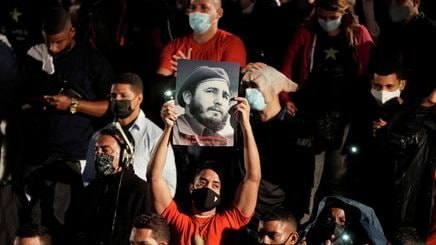
Ten years without Fidel Castro: see 5 milestones of the Cuban leader in Latin American politics (part 2).
3 Support for liberation movements in Latin America.
Inspired by revolutionary internationalism, the government in Havana offered political, logistical, and military support to national liberation movements and guerrilla organizations in Latin America, Africa, and other regions. The Cuban Revolution also inspired organizations that defended the armed struggle as a way of political and social change on the continent.
The strategy contributed to projecting Cuba as an international actor with far greater influence than its territorial and economic dimension, but it also placed the country at the center of conflicts and ideological disputes during the Cold War.
4 Integration in Latin America.
With the end of the Cold War and the dissolution of the Soviet Union, Cuba lost its main economic and strategic partner. However, at the turn of the century, Fidel found in Venezuelan President Hugo Chávez an opportunity to restore Havana's regional outlook.
The rapprochement between Havana and Caracas was characterized by energetic, commercial, educational and health cooperation. Venezuela began supplying oil to Cuba on preferential terms, while the Cuban government expanded its activities in areas such as health and education.
5 Medical diplomacy and Cuban solidarity.
One of the most enduring hallmarks of Fidel Castro's foreign policy was international medical cooperation. Since the early years of the revolution, Cuba has begun sending health professionals to developing countries, particularly Latin America, Africa and the Caribbean, to work in underserved areas and in humanitarian emergencies.