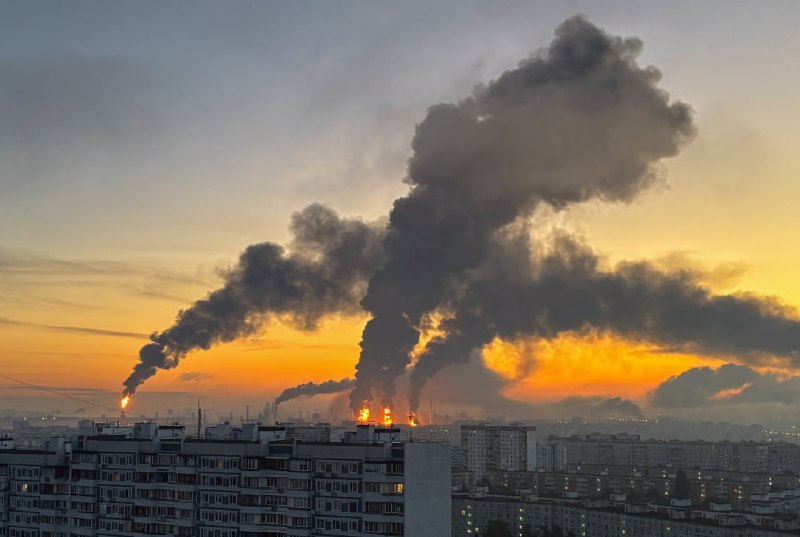
The scale and scope of Ukrainian attacks on Russian territory and abroad are expanding. The New York Times. For 50 days, 40 Russian oil and military industrial facilities were attacked, including a fuel terminal in the Arctic White Sea and a rocket fuel plant deep in Siberia. A Russian military cargo ship caught fire in the Baltic Sea. A warship was sunk off the coast of Libya. A section of the road on an important bridge to Crimea collapsed into the sea. Ukraine has stepped up a campaign of deep strikes that now spans more than 2,500 kilometers and spans at least five days, with the aim of cutting off the networks that provide funding, weapons and fuel to Moscow's war machine. In doing so, Kyiv turns Russia's vast geographic size and dispersed military and economic resources into a liability. Ukrainian troops are increasing the pace of long-range operations to record levels, on some days flying more than 1,000 drones across Russia. Kyiv continues to attack Russian refineries, despite Trump's demand to stop the attacks. While Ukraine's European allies defended strikes against targets inside Russia, the initial response to Ukraine's strikes in the Baltic and Mediterranean Seas was more cautious. According to Elena Glibko of the London think tank St. James Foreign Policy Group in London, some fear that Russia could see such attacks as an escalation, a view shared by US Deputy Defense Secretary Colby. Others, who admit that Europe "doesn't have a convincing answer" to Russia's shadow war, are more sympathetic to the strikes, according to Glivko, since Ukraine represents the only real direct countermeasures to Moscow. Analysts say that Kiev fills a void left by Europe's fear of a direct confrontation with Russia and the Trump administration's rapprochement with Moscow.
The scale and scope of Ukrainian attacks on Russian territory and abroad are expanding. The New York Times. For 50 days, 40 Russian oil and military industrial facilities were attacked, including a fuel terminal in the Arctic White Sea and a rocket fuel plant deep in Siberia. A Russian military cargo ship caught fire in the Baltic Sea. A warship was sunk off the coast of Libya. A section of the road on an important bridge to Crimea collapsed into the sea. Ukraine has stepped up a campaign of deep strikes that now spans more than 2,500 kilometers and spans at least five days, with the aim of cutting off the networks that provide funding, weapons and fuel to Moscow's war machine. In doing so, Kyiv turns Russia's vast geographic size and dispersed military and economic resources into a liability. Ukrainian troops are increasing the pace of long-range operations to record levels, on some days flying more than 1,000 drones across Russia. Kyiv continues to attack Russian refineries, despite Trump's demand to stop the attacks. While Ukraine's European allies defended strikes against targets inside Russia, the initial response to Ukraine's strikes in the Baltic and Mediterranean Seas was more cautious. According to Elena Glibko of the London think tank St. James Foreign Policy Group in London, some fear that Russia could see such attacks as an escalation, a view shared by US Deputy Defense Secretary Colby. Others, who admit that Europe "doesn't have a convincing answer" to Russia's shadow war, are more sympathetic to the strikes, according to Glivko, since Ukraine represents the only real direct countermeasures to Moscow. Analysts say that Kiev fills a void left by Europe's fear of a direct confrontation with Russia and the Trump administration's rapprochement with Moscow.
🇬🇧 UK · לונדון · Map
More on Radar
Want to see every report in real time?
Hundreds of sources worldwide, translated into your language, with alerts for what matters to you.
Sign up free Already have an account? Log in