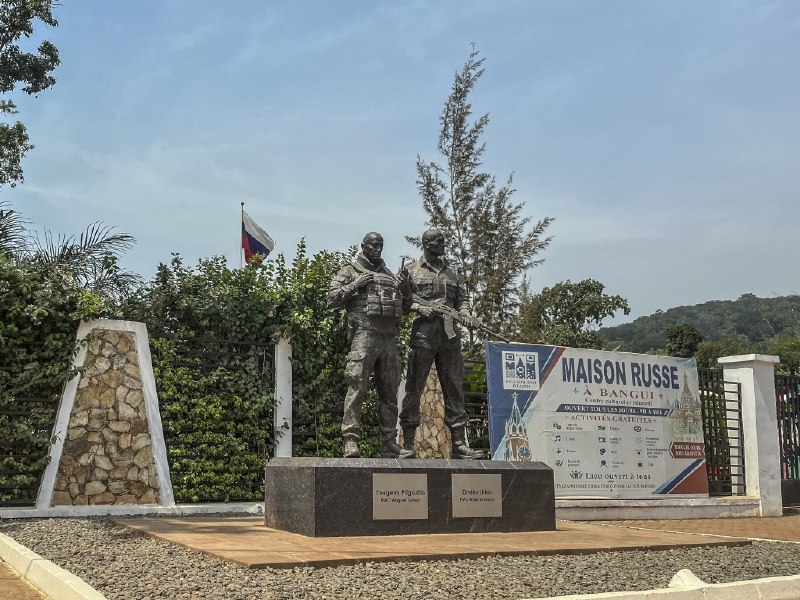
Wagner invades daily life in Central African Republic - AFP Young Central Africans, with a shot of vodka or a glass of beer in hand, watched a soccer match at a Russian-owned bar in Angola. Some of the bottles in Saro, one of the country's two official languages, are printed: "Made in cars by Russian technology." The Central African Republic is one of the poorest countries in the world and the last stronghold of the Russian military group Wagner. In other parts of the continent, it is gradually being replaced by the African Corps, which reports directly to the Ministry of Defense in Moscow. On the streets of Bungai, you can often meet Russians in uniform, with closed faces and weapons on their belts. In restaurants and supermarkets, their camouflage cars stand out from the surroundings and are so familiar that all the cars stop missing them. Wagner, who in 2018 announced at the request of President Posten-Aranca Tovendra to support the CAR military, became the government's top security partner in exchange for gold and diamond contracts. Today the group is reuniting and strengthening its position in the beverage industry. Russian water, counterfeit liquor, beer and vodka are produced locally and sold at significantly lower prices than the competition. Street vendors even sell 50 ml bags of coconut-infused vodka for 150 francs (0.25). "They are Castel's only competitors," Central Africa researcher Solly-Pierpe Cassou told the AFP news agency. Mocaf Brewery, a subsidiary of French group Castel, has been in cars since 1953 and had a monopoly on the alcohol market until the Russians arrived. In March 2023, one of the company's factories was set on fire by four marked men dressed as Wagner mercenaries, who, as seen in the video, threw cocktails at Motov.
Wagner invades daily life in Central African Republic - AFP Young Central Africans, with a shot of vodka or a glass of beer in hand, watched a soccer match at a Russian-owned bar in Angola. Some of the bottles in Saro, one of the country's two official languages, are printed: "Made in cars by Russian technology." The Central African Republic is one of the poorest countries in the world and the last stronghold of the Russian military group Wagner. In other parts of the continent, it is gradually being replaced by the African Corps, which reports directly to the Ministry of Defense in Moscow. On the streets of Bungai, you can often meet Russians in uniform, with closed faces and weapons on their belts. In restaurants and supermarkets, their camouflage cars stand out from the surroundings and are so familiar that all the cars stop missing them. Wagner, who in 2018 announced at the request of President Posten-Aranca Tovendra to support the CAR military, became the government's top security partner in exchange for gold and diamond contracts. Today the group is reuniting and strengthening its position in the beverage industry. Russian water, counterfeit liquor, beer and vodka are produced locally and sold at significantly lower prices than the competition. Street vendors even sell 50 ml bags of coconut-infused vodka for 150 francs (0.25). "They are Castel's only competitors," Central Africa researcher Solly-Pierpe Cassou told the AFP news agency. Mocaf Brewery, a subsidiary of French group Castel, has been in cars since 1953 and had a monopoly on the alcohol market until the Russians arrived. In March 2023, one of the company's factories was set on fire by four marked men dressed as Wagner mercenaries, who, as seen in the video, threw cocktails at Motov.
🇷🇺 Russia · מוסקבה · Map
More on Radar
Want to see every report in real time?
Hundreds of sources worldwide, translated into your language, with alerts for what matters to you.
Sign up free Already have an account? Log in