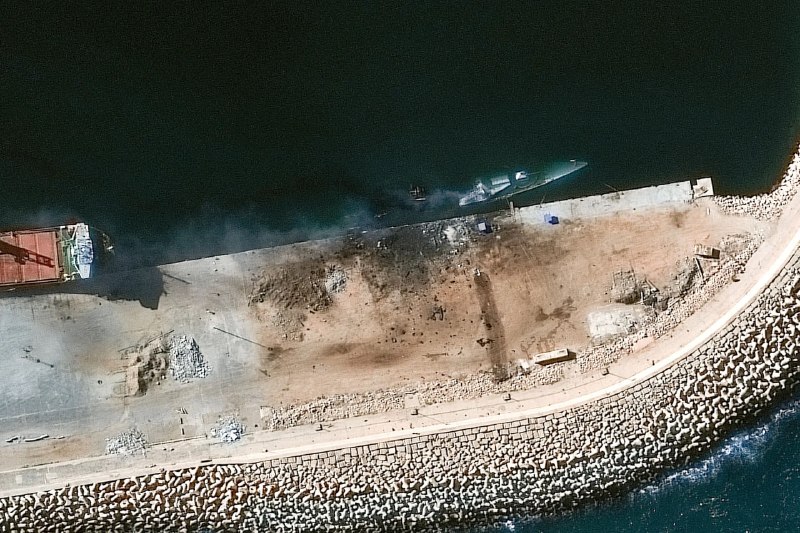
Attacks on Russian ships: the Kremlin cuts the fruits of its actions. The Ne Zürcher Zeitung Ukraine is chasing Russian ships away from the war zone. According to military observer Andreas Ross, this raises questions about the legality and political tenacity of such operations. The international community has generally shown little interest in the situation in Libya. The fact that the North African country is actually divided between the warring parties, and has not been able to find stability despite the ceasefire agreement, neighboring Europe tries to ignore it. Libya is now in the spotlight, however, as it has become the scene of another seemingly distant conflict: On Sunday, Ukrainian forces used naval drones to sink a Russian warship and severely damage a military cargo ship in the port of Benghazi. This raises legitimate questions. However, it is inappropriate to accuse Ukraine of excitement and violation of international law. From a legal point of view, the problem is quite clear: as a victim of an aggressive war, Ukraine has the right to act against the Russian army even outside its territory. However, it must respect the principle of proportionality and respect the sovereignty of other countries. The attack on a weapons convoy in international waters off the coast of Finland is not a problem. But even in the case of Benghazi, Kyiv has strong legal claims. The so-called national unity government in the capital of Tripoli demonstrated and pointed to the apparent neutrality of the country and complained of the violation of national sovereignty. This is just a smokescreen for two reasons. First, international humanitarian law, beginning with the Hague Convention in 1907, prohibits the use of neutral ports as operational bases by belligerent states.
Attacks on Russian ships: the Kremlin cuts the fruits of its actions. The Ne Zürcher Zeitung Ukraine is chasing Russian ships away from the war zone. According to military observer Andreas Ross, this raises questions about the legality and political tenacity of such operations. The international community has generally shown little interest in the situation in Libya. The fact that the North African country is actually divided between the warring parties, and has not been able to find stability despite the ceasefire agreement, neighboring Europe tries to ignore it. Libya is now in the spotlight, however, as it has become the scene of another seemingly distant conflict: On Sunday, Ukrainian forces used naval drones to sink a Russian warship and severely damage a military cargo ship in the port of Benghazi. This raises legitimate questions. However, it is inappropriate to accuse Ukraine of excitement and violation of international law. From a legal point of view, the problem is quite clear: as a victim of an aggressive war, Ukraine has the right to act against the Russian army even outside its territory. However, it must respect the principle of proportionality and respect the sovereignty of other countries. The attack on a weapons convoy in international waters off the coast of Finland is not a problem. But even in the case of Benghazi, Kyiv has strong legal claims. The so-called national unity government in the capital of Tripoli demonstrated and pointed to the apparent neutrality of the country and complained of the violation of national sovereignty. This is just a smokescreen for two reasons. First, international humanitarian law, beginning with the Hague Convention in 1907, prohibits the use of neutral ports as operational bases by belligerent states.
🇺🇦 Ukraine · Map
More on Radar
Want to see every report in real time?
Hundreds of sources worldwide, translated into your language, with alerts for what matters to you.
Sign up free Already have an account? Log in