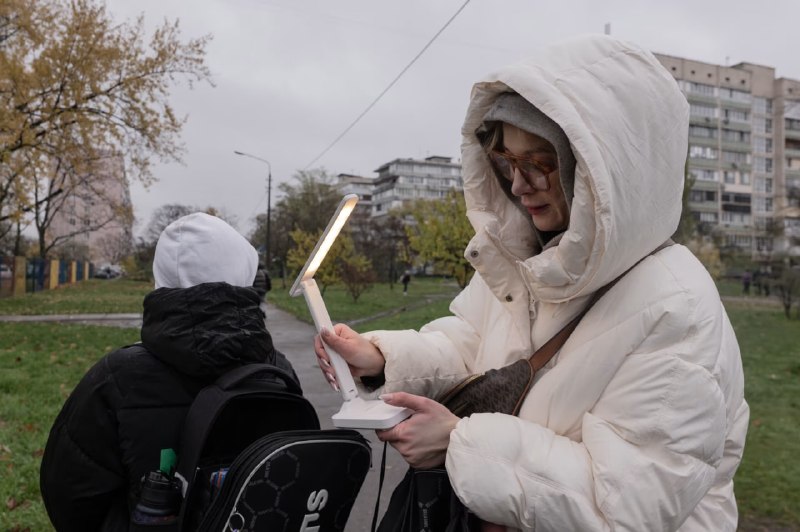
With the onset of another winter of war, the people of Kyiv are thinking of leaving Soff. The Wall Street Journal. Russia launches massive attacks on power plants, turning everyday life into a struggle for survival. This month, the last vestiges of Tatiana Limerova's carefree world disappeared when she was forced to live with only four hours of electricity a day. Hair drying has become a luxury. The Wi-Fi is gone, and when the mobile chargers run out, you have to go to the nearest mall to charge your gadgets. Her 10-year-old son now has a reading light in his school backpack. At the beauty salon where she works, the temperature was around 10 degrees in mid-November, with clients wrapped in blankets to keep warm while washing their hair. "We are holding on and don't want to leave," says the 40-year-old Limerova. "But if my child can't go to school and lives in conditions that make survival impossible, that's the situation that will force me to leave." Millions of Ukrainians in Kyiv and other cities are reconsidering their "red lines", the violation of which will force them to evacuate. Russian attacks are steadily intensifying as winter approaches, but the effects appeared earlier this year. During one week in November, Ukraine's largest private energy company, DTEK, was busy restoring power to more than a million consumers. The water supply companies had difficulty keeping the pumps running. In some areas of the city there was no water pressure for several hours. Trendy bars in central Kyiv poured filtered water for patrons to flush and offered pitchers of sewage for toilets that didn't flush. Kiev restaurant co-owner Stanislav Zbartylo has installed a backup water supply system to stay afloat, but the rising cost of the generators he needs is facing a drop in demand. Last month, his establishment operated at a loss.
With the onset of another winter of war, the people of Kyiv are thinking of leaving Soff. The Wall Street Journal. Russia launches massive attacks on power plants, turning everyday life into a struggle for survival. This month, the last vestiges of Tatiana Limerova's carefree world disappeared when she was forced to live with only four hours of electricity a day. Hair drying has become a luxury. The Wi-Fi is gone, and when the mobile chargers run out, you have to go to the nearest mall to charge your gadgets. Her 10-year-old son now has a reading light in his school backpack. At the beauty salon where she works, the temperature was around 10 degrees in mid-November, with clients wrapped in blankets to keep warm while washing their hair. "We are holding on and don't want to leave," says the 40-year-old Limerova. "But if my child can't go to school and lives in conditions that make survival impossible, that's the situation that will force me to leave." Millions of Ukrainians in Kyiv and other cities are reconsidering their "red lines", the violation of which will force them to evacuate. Russian attacks are steadily intensifying as winter approaches, but the effects appeared earlier this year. During one week in November, Ukraine's largest private energy company, DTEK, was busy restoring power to more than a million consumers. The water supply companies had difficulty keeping the pumps running. In some areas of the city there was no water pressure for several hours. Trendy bars in central Kyiv poured filtered water for patrons to flush and offered pitchers of sewage for toilets that didn't flush. Kiev restaurant co-owner Stanislav Zbartylo has installed a backup water supply system to stay afloat, but the rising cost of the generators he needs is facing a drop in demand. Last month, his establishment operated at a loss.
🇺🇦 Ukraine · קייב · Map
More on Radar
Want to see every report in real time?
Hundreds of sources worldwide, translated into your language, with alerts for what matters to you.
Sign up free Already have an account? Log in