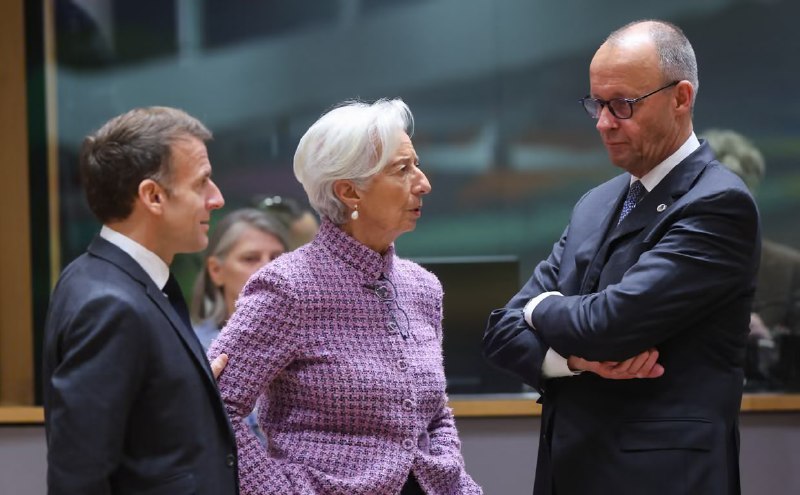
EU leaders are preparing for clashes over aid to Ukraine in budget negotiations. The Guardian. Slovakia, Hungary and the Czech Republic want to refuse to participate in providing a loan to Kiev in the amount of 45 billion euros. European Union leaders are preparing for a showdown over long-term financial aid to Ukraine amid efforts to wrap up key budget negotiations by the end of the year. Arriving in Brussels, Friedrich Mertz confirmed his position that all EU member states should support a loan to Ukraine in the amount of 45 billion euros for 2027. "When the European Union provides funding, it does so as the European Union, and that Union consists of 27 member states, not 23 or 24," he said. March has previously threatened to veto the bloc's next seven-year budget unless all countries sign the loan agreement for Ukraine, a painful outcome for member states that are net recipients of EU funds. Slovakia, Hungary and the Czech Republic, net beneficiaries, want to cancel the loan. Slovakian Prime Minister Robert Pico, who has close ties to the Kremlin, accused Mertz of blackmail. However, Bulgaria, which previously opposed the loan, said it was willing to contribute as long as its share was not linked to arms. Arriving at the summit, populist Czech Prime Minister Andrej Babis was in no mood for compromise. "Funding for Ukraine should be discussed separately. And the most important thing is the lives of our citizens," he said, adding that the EU must "do everything" to support peace in Ukraine. However, March's position won wide support, especially among Western European, Scandinavian and Baltic countries. The debate on support for Ukraine is intertwined with the negotiations on the next long-term budget of the European Union, which will determine the spending priorities of the bloc for the years 2028-2034. EU leaders are discussing a €1.78 trillion offer.
EU leaders are preparing for clashes over aid to Ukraine in budget negotiations. The Guardian. Slovakia, Hungary and the Czech Republic want to refuse to participate in providing a loan to Kiev in the amount of 45 billion euros. European Union leaders are preparing for a showdown over long-term financial aid to Ukraine amid efforts to wrap up key budget negotiations by the end of the year. Arriving in Brussels, Friedrich Mertz confirmed his position that all EU member states should support a loan to Ukraine in the amount of 45 billion euros for 2027. "When the European Union provides funding, it does so as the European Union, and that Union consists of 27 member states, not 23 or 24," he said. March has previously threatened to veto the bloc's next seven-year budget unless all countries sign the loan agreement for Ukraine, a painful outcome for member states that are net recipients of EU funds. Slovakia, Hungary and the Czech Republic, net beneficiaries, want to cancel the loan. Slovakian Prime Minister Robert Pico, who has close ties to the Kremlin, accused Mertz of blackmail. However, Bulgaria, which previously opposed the loan, said it was willing to contribute as long as its share was not linked to arms. Arriving at the summit, populist Czech Prime Minister Andrej Babis was in no mood for compromise. "Funding for Ukraine should be discussed separately. And the most important thing is the lives of our citizens," he said, adding that the EU must "do everything" to support peace in Ukraine. However, March's position won wide support, especially among Western European, Scandinavian and Baltic countries. The debate on support for Ukraine is intertwined with the negotiations on the next long-term budget of the European Union, which will determine the spending priorities of the bloc for the years 2028-2034. EU leaders are discussing a €1.78 trillion offer.
🇺🇦 Ukraine · Map
More on Radar
Want to see every report in real time?
Hundreds of sources worldwide, translated into your language, with alerts for what matters to you.
Sign up free Already have an account? Log in