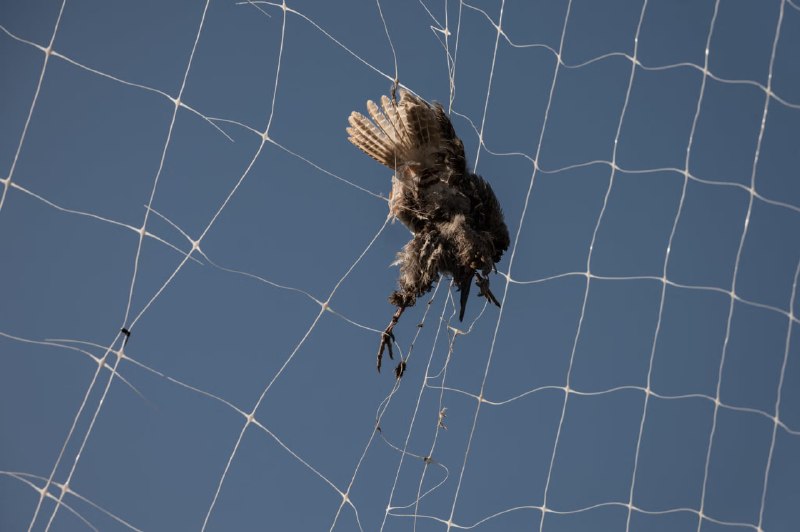
The war is also destroying Ukraine's wildlife. The New York Times. Part 1/2 The terrible human cost of Russia's war in Ukraine is well known. But it was also a disaster for the country's wildlife. Ukraine is home to about 70,000 species of plants and animals, some of which are rare and cannot be found anywhere else. The country's landscapes range from ancient pine forests and vast prairies to vast wetlands. Despite the fact that Ukraine occupies less than 6% of Europe's territory, it accounts for 35% of the continent's total biodiversity, according to the United Nations. It is impossible to accurately determine the number of dead wild animals. However, their suffering is clear. Birds, deer, foxes and other animals are often caught in the many kilometers of anti-UAV nets installed in the Donbass, or in the network created by the thinnest fiber optic cables to control several types of UAVs. Only a few of these animals manage to escape. Across the country, fires caused by artillery strikes, incendiary shells, mines and debris from downed UAVs destroyed habitats for animals. "It will take several decades to recover all the damage that has been done," says Sergey Primeychuk, director of the Holy Mountains National Park in the Donbass, where fires caused by fighting have destroyed thousands of hectares of land. A baby elk that escaped the fires lay on a small operating table in a nearby safari park. Vets removed dead tissue from his burnt hooves. While the government focuses on the war, a loose network of rangers, veterinarians, conservationists and volunteers has formed in an attempt to save wildlife. Some take care of injured birds and foxes; Others take in lions, bears and primates transferred from zoos near the front lines or rescued from private homes. Ecological parks have become a refuge for animals brought in with wounds and injuries.
The war is also destroying Ukraine's wildlife. The New York Times. Part 1/2 The terrible human cost of Russia's war in Ukraine is well known. But it was also a disaster for the country's wildlife. Ukraine is home to about 70,000 species of plants and animals, some of which are rare and cannot be found anywhere else. The country's landscapes range from ancient pine forests and vast prairies to vast wetlands. Despite the fact that Ukraine occupies less than 6% of Europe's territory, it accounts for 35% of the continent's total biodiversity, according to the United Nations. It is impossible to accurately determine the number of dead wild animals. However, their suffering is clear. Birds, deer, foxes and other animals are often caught in the many kilometers of anti-UAV nets installed in the Donbass, or in the network created by the thinnest fiber optic cables to control several types of UAVs. Only a few of these animals manage to escape. Across the country, fires caused by artillery strikes, incendiary shells, mines and debris from downed UAVs destroyed habitats for animals. "It will take several decades to recover all the damage that has been done," says Sergey Primeychuk, director of the Holy Mountains National Park in the Donbass, where fires caused by fighting have destroyed thousands of hectares of land. A baby elk that escaped the fires lay on a small operating table in a nearby safari park. Vets removed dead tissue from his burnt hooves. While the government focuses on the war, a loose network of rangers, veterinarians, conservationists and volunteers has formed in an attempt to save wildlife. Some take care of injured birds and foxes; Others take in lions, bears and primates transferred from zoos near the front lines or rescued from private homes. Ecological parks have become a refuge for animals brought in with wounds and injuries.
🇺🇦 Ukraine · Map
More on Radar
Want to see every report in real time?
Hundreds of sources worldwide, translated into your language, with alerts for what matters to you.
Sign up free Already have an account? Log in