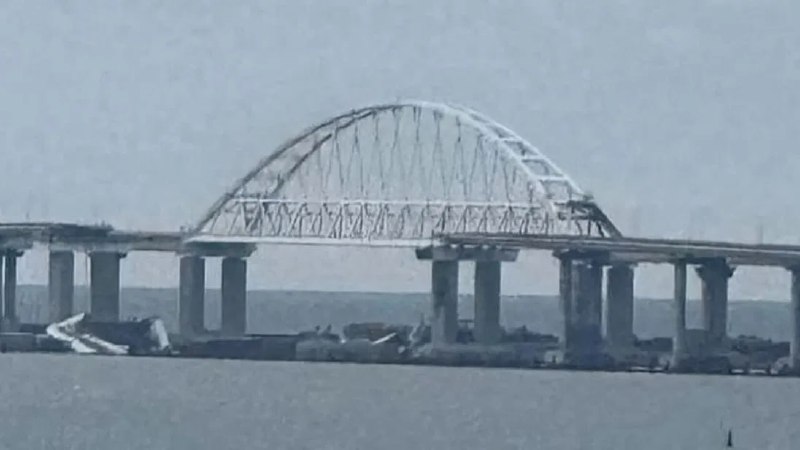
Russia and Ukraine are bombing bridges. Who will win? The Economist. Russia failed in Crimea, but the damage in Kiev may be more significant. The war in Ukraine has turned into a battle for bridges. There are four crossings in total, located at a distance of 725 km from each other. Two combat systems: one creative and carefully planned, the other crude but equally effective. The headlines focused on the destruction of the Kerch bridge. It hurt Putin's ego and undermined his logistics. The arch and overhang of the road bridge are placed in the water and block the shipping channel to the Sea of Azov. The railway bridge was damaged to such an extent that its use is limited to one branch. This is not the only good news for Ukraine. Further north, its forces blocked the crossing of the road connecting Russia with Crimea, a vital artery for the supply of the southern group of soldiers. The blows were like two claws squeezing the peninsula. Those participating in the operation say it demonstrates how well the Ukrainians have mastered combined operations using cruise missiles and UAVs. Their forces carefully breached air defense systems in Crimea, including security around a bridge, before launching waves of night attacks. "Our pilots have become so good, so accurate that when they hit you can't even see a leaf falling from the nearest tree," says one of the Ukrainian commanders. In Kiev the method was more primitive. During the night, 7 Russian ballistic missiles penetrated the weakened air defense and partially destroyed two bridges connecting the west and east banks of the city. Road and metro communications were blocked, and several suspension cables were broken. This morning's commute was miserable for hundreds of thousands of people. The Ukrainian air defense system is suffering: the number of interceptors is decreasing, and the United States is pursuing a deliberate policy of delaying supplies. But there is one area where they seem to be winning.
Russia and Ukraine are bombing bridges. Who will win? The Economist. Russia failed in Crimea, but the damage in Kiev may be more significant. The war in Ukraine has turned into a battle for bridges. There are four crossings in total, located at a distance of 725 km from each other. Two combat systems: one creative and carefully planned, the other crude but equally effective. The headlines focused on the destruction of the Kerch bridge. It hurt Putin's ego and undermined his logistics. The arch and overhang of the road bridge are placed in the water and block the shipping channel to the Sea of Azov. The railway bridge was damaged to such an extent that its use is limited to one branch. This is not the only good news for Ukraine. Further north, its forces blocked the crossing of the road connecting Russia with Crimea, a vital artery for the supply of the southern group of soldiers. The blows were like two claws squeezing the peninsula. Those participating in the operation say it demonstrates how well the Ukrainians have mastered combined operations using cruise missiles and UAVs. Their forces carefully breached air defense systems in Crimea, including security around a bridge, before launching waves of night attacks. "Our pilots have become so good, so accurate that when they hit you can't even see a leaf falling from the nearest tree," says one of the Ukrainian commanders. In Kiev the method was more primitive. During the night, 7 Russian ballistic missiles penetrated the weakened air defense and partially destroyed two bridges connecting the west and east banks of the city. Road and metro communications were blocked, and several suspension cables were broken. This morning's commute was miserable for hundreds of thousands of people. The Ukrainian air defense system is suffering: the number of interceptors is decreasing, and the United States is pursuing a deliberate policy of delaying supplies. But there is one area where they seem to be winning.
🇺🇦 Ukraine · קייב · Map
More on Radar
Want to see every report in real time?
Hundreds of sources worldwide, translated into your language, with alerts for what matters to you.
Sign up free Already have an account? Log in