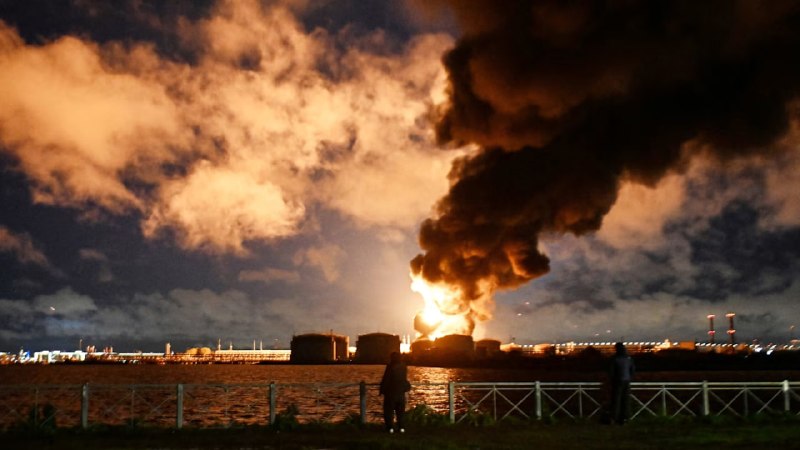
Gasoline imports to Russia reached record levels amid Ukraine's attacks on refineries. The Financial Times. In October, Russia imported record amounts of gasoline by sea. Seaborne imports reached 390,000 tons, according to Kepler. It marked a dramatic shift in Russia's traditional role as a fuel exporter and highlighted its vulnerability to Ukrainian attacks on fuel infrastructure. The situation stabilized only after Moscow introduced emergency measures to ensure supplies to the market and increase imports, including from Morocco, Turkey, India and Egypt. "Russia is gradually changing its position in the world oil products market, turning from a major fuel export center to an increasingly important import market. This is an impressive turnaround," said Sumit Ritulia, principal analyst at Kepler. Russia began importing gasoline by sea in July, targeting northern Baltic ports and the White Sea coast to avoid drone strikes in the Black Sea. Russia also imported record amounts of goods from neighboring Belarus in July, according to estimates by the Belarusian think tank BEROC. Since then, Russia has imported more than 600,000 tons of gasoline from Belarus, prompting Minsk to divert supplies from other export markets and run its refineries at near full capacity. Kazakhstan has also supplied Russia with another 8,000 tons of gasoline since the summer, Energy Minister Arlen Akanzhanov said. The wide geographic distribution of suppliers indicates that Russia has made every effort to secure additional gasoline supplies. Analysts claim that importing gasoline is no longer just a short-term solution for the Kremlin and has become an integral part of meeting the country's long-term needs. "It is no longer just managing periodic regional deficits.
Gasoline imports to Russia reached record levels amid Ukraine's attacks on refineries. The Financial Times. In October, Russia imported record amounts of gasoline by sea. Seaborne imports reached 390,000 tons, according to Kepler. It marked a dramatic shift in Russia's traditional role as a fuel exporter and highlighted its vulnerability to Ukrainian attacks on fuel infrastructure. The situation stabilized only after Moscow introduced emergency measures to ensure supplies to the market and increase imports, including from Morocco, Turkey, India and Egypt. "Russia is gradually changing its position in the world oil products market, turning from a major fuel export center to an increasingly important import market. This is an impressive turnaround," said Sumit Ritulia, principal analyst at Kepler. Russia began importing gasoline by sea in July, targeting northern Baltic ports and the White Sea coast to avoid drone strikes in the Black Sea. Russia also imported record amounts of goods from neighboring Belarus in July, according to estimates by the Belarusian think tank BEROC. Since then, Russia has imported more than 600,000 tons of gasoline from Belarus, prompting Minsk to divert supplies from other export markets and run its refineries at near full capacity. Kazakhstan has also supplied Russia with another 8,000 tons of gasoline since the summer, Energy Minister Arlen Akanzhanov said. The wide geographic distribution of suppliers indicates that Russia has made every effort to secure additional gasoline supplies. Analysts claim that importing gasoline is no longer just a short-term solution for the Kremlin and has become an integral part of meeting the country's long-term needs. "It is no longer just managing periodic regional deficits.
🇷🇺 Russia · Map
More on Radar
Want to see every report in real time?
Hundreds of sources worldwide, translated into your language, with alerts for what matters to you.
Sign up free Already have an account? Log in