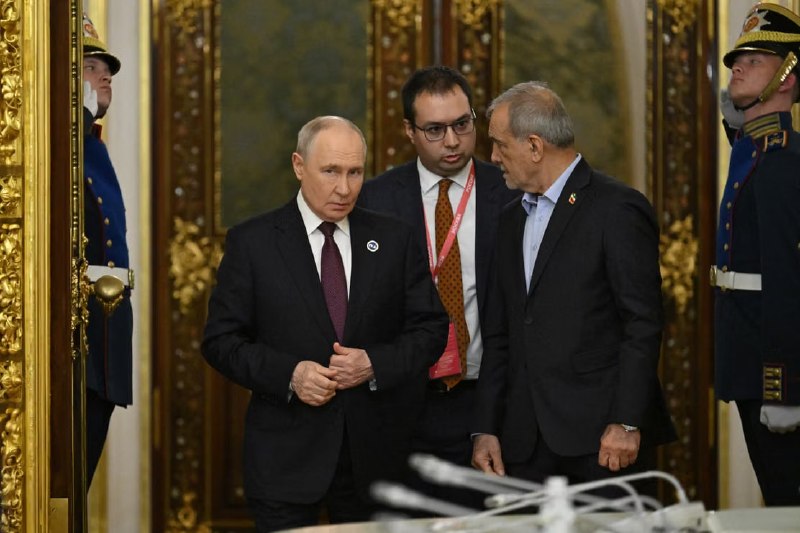
Against the background of the conflict with Israel and the USA, Iran is strengthening ties with Russia. Le Monde. Part 1/2 The number of diplomatic meetings between Tehran and Moscow is increasing, and the Caspian Sea is becoming a strategic axis for their trade and military exchanges. The war brings Iran and Russia closer together. A series of diplomatic meetings demonstrates the desire of Tehran and Moscow to strengthen their partnership. On October 27, Iranian President Masoud Pazhkian was a guest at the Gas Exporting Countries Forum in Moscow. On November 5, it was the turn of Mohsen Razai, a member of the Supreme National Security Council, in the Kremlin. On the ground, it seems that this cooperation has also intensified as a result of the US-Israeli attacks on Iran. [In the war] "It at least continued, and maybe even intensified," says Jim Lamson of the Center for Nonproliferation Studies. The two partners also intend to disrupt US Central Command's initiatives after it announced its intention to strengthen control over the flow of weapons, dual-use technologies and sanctioned goods through Iran's land borders and the Caspian Sea. In fact, this closed sea has become an important strategic axis between the two neighboring countries, allowing them to increase trade away from American surveillance. In recent months, Iranian ports in the Caspian Sea have been operating at full capacity, continuously receiving Russian supplies of basic food: wheat, corn, sunflower oil and animal feed. "From January to August, Iran imported 70% more grain than the previous year, thus rising to third place among all buyers of Russian grain," notes Nikita Samagin, an Iran expert at the Carnegie Foundation.
Against the background of the conflict with Israel and the USA, Iran is strengthening ties with Russia. Le Monde. Part 1/2 The number of diplomatic meetings between Tehran and Moscow is increasing, and the Caspian Sea is becoming a strategic axis for their trade and military exchanges. The war brings Iran and Russia closer together. A series of diplomatic meetings demonstrates the desire of Tehran and Moscow to strengthen their partnership. On October 27, Iranian President Masoud Pazhkian was a guest at the Gas Exporting Countries Forum in Moscow. On November 5, it was the turn of Mohsen Razai, a member of the Supreme National Security Council, in the Kremlin. On the ground, it seems that this cooperation has also intensified as a result of the US-Israeli attacks on Iran. [In the war] "It at least continued, and maybe even intensified," says Jim Lamson of the Center for Nonproliferation Studies. The two partners also intend to disrupt US Central Command's initiatives after it announced its intention to strengthen control over the flow of weapons, dual-use technologies and sanctioned goods through Iran's land borders and the Caspian Sea. In fact, this closed sea has become an important strategic axis between the two neighboring countries, allowing them to increase trade away from American surveillance. In recent months, Iranian ports in the Caspian Sea have been operating at full capacity, continuously receiving Russian supplies of basic food: wheat, corn, sunflower oil and animal feed. "From January to August, Iran imported 70% more grain than the previous year, thus rising to third place among all buyers of Russian grain," notes Nikita Samagin, an Iran expert at the Carnegie Foundation.
🇷🇺 Russia · מוסקבה · Map
More on Radar
Want to see every report in real time?
Hundreds of sources worldwide, translated into your language, with alerts for what matters to you.
Sign up free Already have an account? Log in