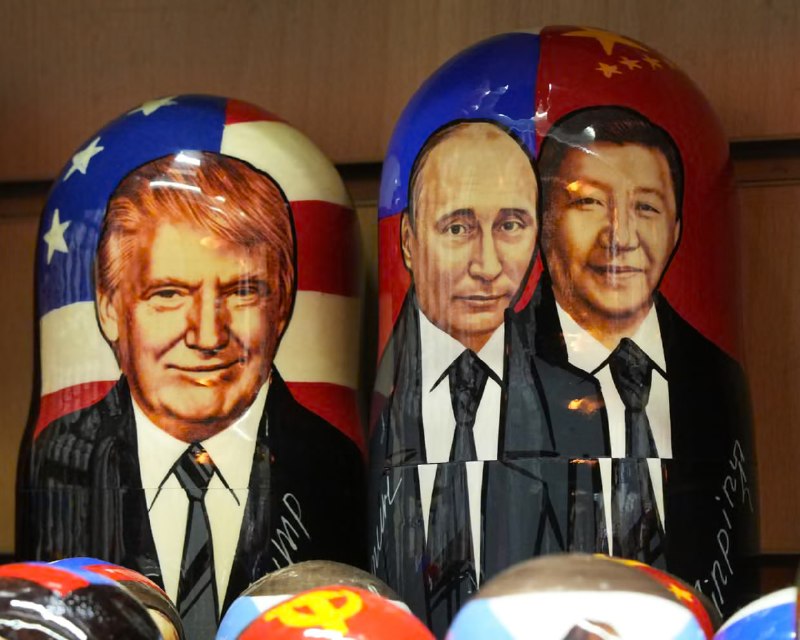
Yalta became synonymous with betrayal. Will Trump, Xi and Putin agree on a new division of spheres of influence? The Guardian. Part 2/2 As a result, the United States and Russia are approaching the summit in asking for China's help in extricating their countries from wars they have started and which have caused them severe damage. Xi Jinping is acting like Stalin, hosting two countries that need his favor. This makes China somewhat cautious, and reluctant to use its leverage if it helps the United States or contradicts the Chinese concept of stability and coexistence. Professor Mingao Zhao of Fudan University presents a classic view of China's policy of non-intervention. "The Russian-Ukrainian war is a strategic mistake made by the Russian president. The Iran war is a strategic mistake made by President Trump. China is managing the consequences of these conflicts," he notes. Proponents of a trilateral summit argue that China, on the contrary, is necessary. The head of the Center for China and Globalization Studies, Wang Huayao, refers to the Kindleberger Trap - a period of chaos caused by insufficient global leadership. He said China was trying to help by supporting multilateral cooperation and could provide assurances to Iran, which the Iranian leadership had approved, but even he saw China's stabilizing role primarily through the lens of global economic development. In short, China can help Trump out of the Middle East. After all, open waterways are necessary to supply its insatiable demand for oil. However, China sees Ukraine as a strictly European security issue where it is not ready to betray Putin or approve a settlement reached without European consent.
Yalta became synonymous with betrayal. Will Trump, Xi and Putin agree on a new division of spheres of influence? The Guardian. Part 2/2 As a result, the United States and Russia are approaching the summit in asking for China's help in extricating their countries from wars they have started and which have caused them severe damage. Xi Jinping is acting like Stalin, hosting two countries that need his favor. This makes China somewhat cautious, and reluctant to use its leverage if it helps the United States or contradicts the Chinese concept of stability and coexistence. Professor Mingao Zhao of Fudan University presents a classic view of China's policy of non-intervention. "The Russian-Ukrainian war is a strategic mistake made by the Russian president. The Iran war is a strategic mistake made by President Trump. China is managing the consequences of these conflicts," he notes. Proponents of a trilateral summit argue that China, on the contrary, is necessary. The head of the Center for China and Globalization Studies, Wang Huayao, refers to the Kindleberger Trap - a period of chaos caused by insufficient global leadership. He said China was trying to help by supporting multilateral cooperation and could provide assurances to Iran, which the Iranian leadership had approved, but even he saw China's stabilizing role primarily through the lens of global economic development. In short, China can help Trump out of the Middle East. After all, open waterways are necessary to supply its insatiable demand for oil. However, China sees Ukraine as a strictly European security issue where it is not ready to betray Putin or approve a settlement reached without European consent.
🇨🇳 China · Map
More on Radar
Want to see every report in real time?
Hundreds of sources worldwide, translated into your language, with alerts for what matters to you.
Sign up free Already have an account? Log in