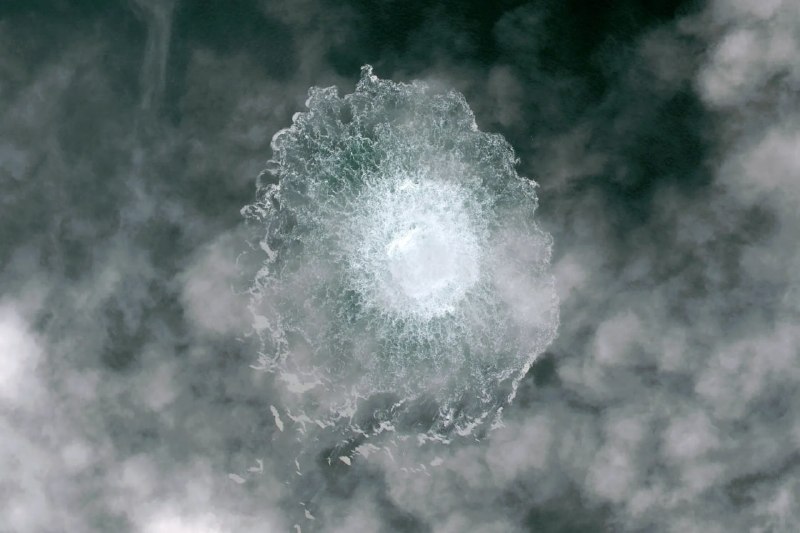
At the Nord Stream bombing trial, an expert explained how divers managed to plant explosives at great depth. Dr. Spiegel. While testifying at the trial in Hamburg, a Bundeswehr expert, a diver, described how the defendants managed to lower and plant explosive devices to a depth of 80 meters. From his point of view, it makes sense to use two divers with the same equipment and separate transport of explosives, perhaps by submarine cable. According to the expert, diving with compressed air to a depth of 80 meters is not recommended. A suitable alternative is a so-called trimix mixture of helium, nitrogen and oxygen, inhaled through a closed-circuit diving apparatus. The descent to a depth of about 74 meters takes four to five minutes, after which he has to dive for about 15 minutes at the bottom before he has to come to the surface. According to preliminary data, the explosive could have been released in diving cylinders. However, due to the heavy weight, the mine diver does not consider this method to be the most suitable. According to him, he will simply release explosive charges weighing between 14 and 27 kg in a package and secure them to the pipes with a ground pin. In addition, to avoid detection, he would dive at night. According to the investigation, at least six explosive devices were attached to the pipes between September 10 and September 22, 2022. The expert said it was "doable". He would take all the equipment, including all the spare cylinders, at once. Even used, it will probably cost between 60,000 and 90,000 euros.
At the Nord Stream bombing trial, an expert explained how divers managed to plant explosives at great depth. Dr. Spiegel. While testifying at the trial in Hamburg, a Bundeswehr expert, a diver, described how the defendants managed to lower and plant explosive devices to a depth of 80 meters. From his point of view, it makes sense to use two divers with the same equipment and separate transport of explosives, perhaps by submarine cable. According to the expert, diving with compressed air to a depth of 80 meters is not recommended. A suitable alternative is a so-called trimix mixture of helium, nitrogen and oxygen, inhaled through a closed-circuit diving apparatus. The descent to a depth of about 74 meters takes four to five minutes, after which he has to dive for about 15 minutes at the bottom before he has to come to the surface. According to preliminary data, the explosive could have been released in diving cylinders. However, due to the heavy weight, the mine diver does not consider this method to be the most suitable. According to him, he will simply release explosive charges weighing between 14 and 27 kg in a package and secure them to the pipes with a ground pin. In addition, to avoid detection, he would dive at night. According to the investigation, at least six explosive devices were attached to the pipes between September 10 and September 22, 2022. The expert said it was "doable". He would take all the equipment, including all the spare cylinders, at once. Even used, it will probably cost between 60,000 and 90,000 euros.
🇩🇪 Germany · המבורג · Map
More on Radar
Want to see every report in real time?
Hundreds of sources worldwide, translated into your language, with alerts for what matters to you.
Sign up free Already have an account? Log in