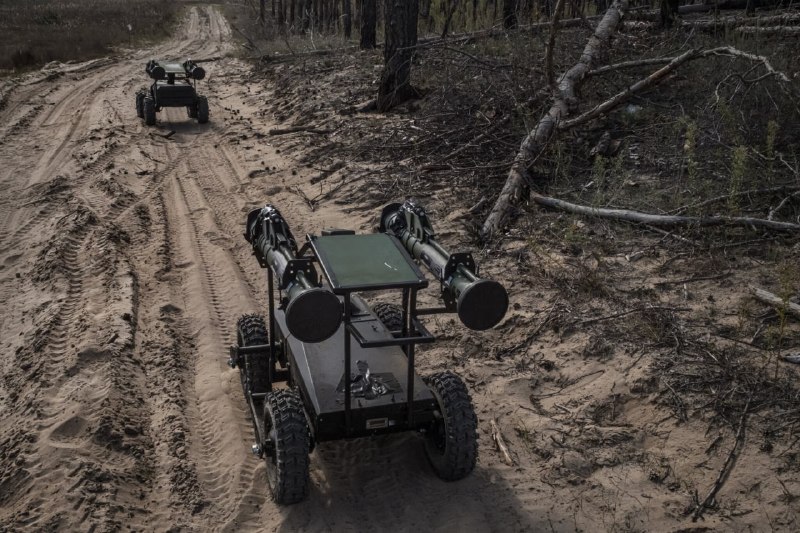
The details of the operation that helped Ukraine turn the situation in its favor. The New York Times. Part 2/2 As the Ukrainians advanced, it became clear how important their mid-range UAV strikes were. According to General Biletsky, the Third Corps carried out up to 50 attacks a day on Russian vehicles, sometimes as deep as 160 kilometers behind Russian lines. "It is customary for the enemy to unload 40-50 kilometers from the front line and then continue on foot," Biletsky said. According to him, sometimes a soldier had to carry one artillery shell for a distance of more than 30 km. "Their logistics are almost paralyzed," he added. The Russian soldiers lacked fuel, ammunition and food. Some of them started placing cardboard signs in front of their posts saying they were hungry and thirsty, several commanders said. Critically, when reinforcements were called in, Ukrainian drones hit them when they got off their vehicles many kilometers before they could reach the front line, battalion commander Gorovets said. The use of combat robots to overcome Russia's numerical superiority is steadily increasing. Former Ukrainian attack fighter Makar, 27, said he was assigned to form a special battalion of remotely controlled attack vehicles. "The Ukrainians cannot surpass the Russians," he said in an interview. "But we can surpass them in technology, quality and scale if we constantly stay a few steps ahead of them." Ground robots have become essential. In the underground command posts visited by journalists, Ukrainian soldiers watched a live video of vehicles driving through the combat zone, carrying cargo. Sometimes they took out bodies of dead soldiers. Many robots break down or are attacked by Russian drones. But many manage to deliver the goods.
The details of the operation that helped Ukraine turn the situation in its favor. The New York Times. Part 2/2 As the Ukrainians advanced, it became clear how important their mid-range UAV strikes were. According to General Biletsky, the Third Corps carried out up to 50 attacks a day on Russian vehicles, sometimes as deep as 160 kilometers behind Russian lines. "It is customary for the enemy to unload 40-50 kilometers from the front line and then continue on foot," Biletsky said. According to him, sometimes a soldier had to carry one artillery shell for a distance of more than 30 km. "Their logistics are almost paralyzed," he added. The Russian soldiers lacked fuel, ammunition and food. Some of them started placing cardboard signs in front of their posts saying they were hungry and thirsty, several commanders said. Critically, when reinforcements were called in, Ukrainian drones hit them when they got off their vehicles many kilometers before they could reach the front line, battalion commander Gorovets said. The use of combat robots to overcome Russia's numerical superiority is steadily increasing. Former Ukrainian attack fighter Makar, 27, said he was assigned to form a special battalion of remotely controlled attack vehicles. "The Ukrainians cannot surpass the Russians," he said in an interview. "But we can surpass them in technology, quality and scale if we constantly stay a few steps ahead of them." Ground robots have become essential. In the underground command posts visited by journalists, Ukrainian soldiers watched a live video of vehicles driving through the combat zone, carrying cargo. Sometimes they took out bodies of dead soldiers. Many robots break down or are attacked by Russian drones. But many manage to deliver the goods.
🇺🇦 Ukraine · Map
More on Radar
Want to see every report in real time?
Hundreds of sources worldwide, translated into your language, with alerts for what matters to you.
Sign up free Already have an account? Log in