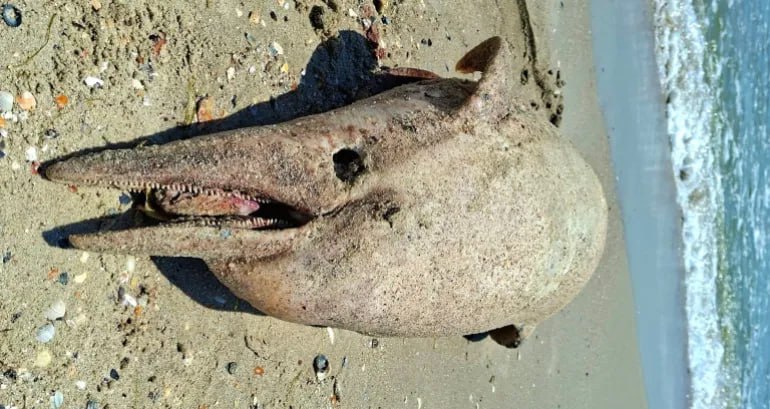
Dead dolphins, sea mines: Russian-Ukrainian war ravages the Black Sea -. Al Jazeera. The fighting is leading to the deaths of hundreds of dolphins, short-beaked dolphins and teddy bears, says Ivan Rusev, chief researcher at Tozlovsky National Park in southern Ukraine. In 2022 alone, about 50,000 dolphins died, and by 2026 their number had exceeded 120,000 - one out of every four dolphins in the Black Sea. Dolphins are at the top of the food chain, and their mass extermination causes enormous damage to the Black Sea ecosystem, which has already suffered from chemicals contained in munitions, as well as oil, fuel and oil leaks from dozens of sunken or damaged warships and tankers. Many dead dolphins still have fins, but they look emaciated. Explosions, cruise missile launches, and military sonar systems confuse them, deafening their primary survival tool, the echo, and leaving them unable to navigate, communicate, or hunt. "If a dolphin can't fish, it loses weight quickly," Rusev says. The dolphins move to consume their fat, which has already accumulated pollutants. Self-poisoning weakens their immune system and they succumb to deadly respiratory infections. The chronic environmental damage from the war was compounded by another shock: the destruction in 2023 of the huge Cahubka Dam, leaving behind more than 18 cubic kilometers of polluted water. Fish species such as mullet and bluefish have become rare. These changes will inevitably affect dolphins. "Because dolphins are at the top of the food chain, everything from zooplankton to fish gets to them," Rusev said. Ecologists from other countries in the Black Sea - Bulgaria, Romania, Turkey - also reported a sharp increase in the number of dolphin deaths.
Dead dolphins, sea mines: Russian-Ukrainian war ravages the Black Sea -. Al Jazeera. The fighting is leading to the deaths of hundreds of dolphins, short-beaked dolphins and teddy bears, says Ivan Rusev, chief researcher at Tozlovsky National Park in southern Ukraine. In 2022 alone, about 50,000 dolphins died, and by 2026 their number had exceeded 120,000 - one out of every four dolphins in the Black Sea. Dolphins are at the top of the food chain, and their mass extermination causes enormous damage to the Black Sea ecosystem, which has already suffered from chemicals contained in munitions, as well as oil, fuel and oil leaks from dozens of sunken or damaged warships and tankers. Many dead dolphins still have fins, but they look emaciated. Explosions, cruise missile launches, and military sonar systems confuse them, deafening their primary survival tool, the echo, and leaving them unable to navigate, communicate, or hunt. "If a dolphin can't fish, it loses weight quickly," Rusev says. The dolphins move to consume their fat, which has already accumulated pollutants. Self-poisoning weakens their immune system and they succumb to deadly respiratory infections. The chronic environmental damage from the war was compounded by another shock: the destruction in 2023 of the huge Cahubka Dam, leaving behind more than 18 cubic kilometers of polluted water. Fish species such as mullet and bluefish have become rare. These changes will inevitably affect dolphins. "Because dolphins are at the top of the food chain, everything from zooplankton to fish gets to them," Rusev said. Ecologists from other countries in the Black Sea - Bulgaria, Romania, Turkey - also reported a sharp increase in the number of dolphin deaths.
🇹🇷 Turkey · Map
More on Radar
Want to see every report in real time?
Hundreds of sources worldwide, translated into your language, with alerts for what matters to you.
Sign up free Already have an account? Log in