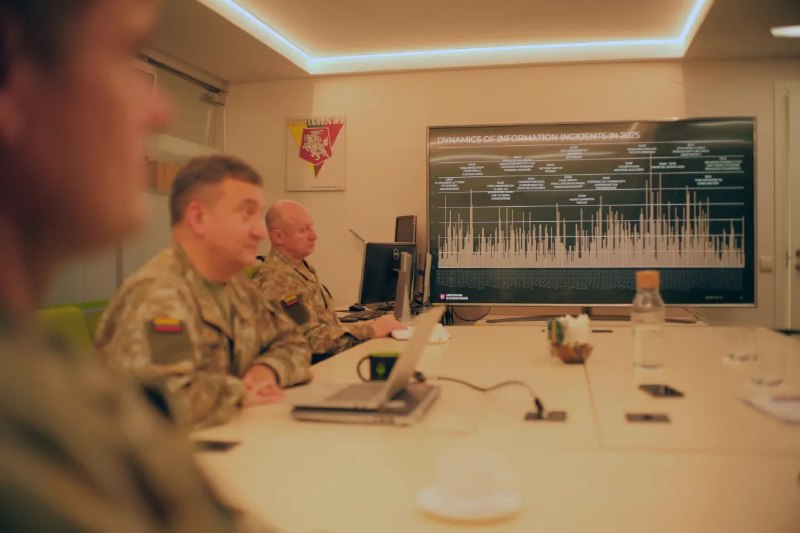
The command center to fight fake news, where the "elves" thwart the plans of Putin's trolls -. The Sunday Times. Part 2/2 Every Thursday, officials compile an assessment of the information threats facing Lithuania. Different information narratives are identified and their potential damage to society or government institutions is assessed. Each of them is assigned a risk rating that determines additional actions. The Lithuanian team uses a variety of measures to respond to threats. Sometimes officials publicly disclose attempts to manipulate information; Sometimes they work with social media companies to eliminate bots. In other cases, they deliberately do nothing, believing that rebuttal will only reinforce an obscure narrative that few have seen. In times of heightened risk, analysts have only 15 minutes to assess a new version of events spreading on social media. "Our main goal is to get ahead of our rivals," says analyst Vitkauskas. "If you're behind, you've already lost. "Britain has direct experience in this matter. Keir Gilles, a Russia expert at Chatham House, said British authorities had been too slow to fill information gaps during periods of social unrest. He gave the example of the riots in Southport that were caused by false information about the identity of the attacker, which took officials hours to correct. Lithuanians often try to stop hostile narratives before they have a chance to spread. A volunteer told how he spends hours trying to "poison" the algorithms of his social networks. It tracks accounts that have spread Russian propaganda, watches their videos and "trains" TikTok to plunge it deeper into the same information bubble that a vulnerable Lithuanian user might encounter. "I'm not scrolling through my feed looking for bad news, I'm scrolling through my feed looking for misinformation," he said.
The command center to fight fake news, where the "elves" thwart the plans of Putin's trolls -. The Sunday Times. Part 2/2 Every Thursday, officials compile an assessment of the information threats facing Lithuania. Different information narratives are identified and their potential damage to society or government institutions is assessed. Each of them is assigned a risk rating that determines additional actions. The Lithuanian team uses a variety of measures to respond to threats. Sometimes officials publicly disclose attempts to manipulate information; Sometimes they work with social media companies to eliminate bots. In other cases, they deliberately do nothing, believing that rebuttal will only reinforce an obscure narrative that few have seen. In times of heightened risk, analysts have only 15 minutes to assess a new version of events spreading on social media. "Our main goal is to get ahead of our rivals," says analyst Vitkauskas. "If you're behind, you've already lost. "Britain has direct experience in this matter. Keir Gilles, a Russia expert at Chatham House, said British authorities had been too slow to fill information gaps during periods of social unrest. He gave the example of the riots in Southport that were caused by false information about the identity of the attacker, which took officials hours to correct. Lithuanians often try to stop hostile narratives before they have a chance to spread. A volunteer told how he spends hours trying to "poison" the algorithms of his social networks. It tracks accounts that have spread Russian propaganda, watches their videos and "trains" TikTok to plunge it deeper into the same information bubble that a vulnerable Lithuanian user might encounter. "I'm not scrolling through my feed looking for bad news, I'm scrolling through my feed looking for misinformation," he said.