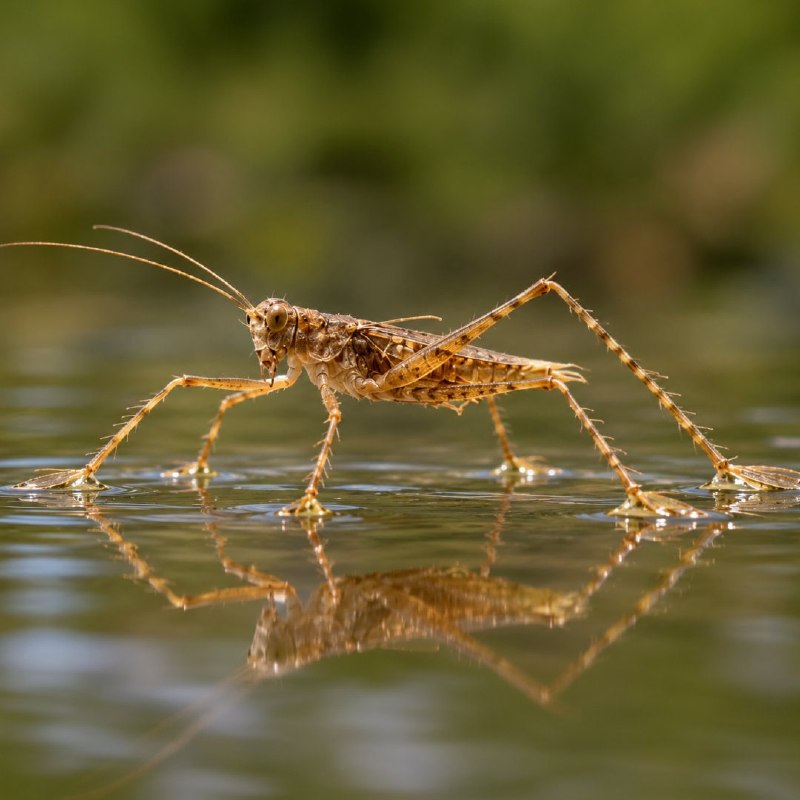
Chinese scientists discovered grasshoppers belonging to a previously unknown family of insects in 99-million-year-old amber fossils. It was determined that wingless grasshoppers, who lived at the same time as dinosaurs, were able to walk on water by utilizing the surface tension of the water. Creatures that could move thanks to their water-repellent hairs and shovel-like hind legs were considered herbivores. The creatures called "Hydrelcana jangi" have been classified under a new family of insects called Hydrelcanidae.
Chinese scientists discovered grasshoppers belonging to a previously unknown family of insects in 99-million-year-old amber fossils. It was determined that wingless grasshoppers, who lived at the same time as dinosaurs, were able to walk on water by utilizing the surface tension of the water. Creatures that could move thanks to their water-repellent hairs and shovel-like hind legs were considered herbivores. The creatures called "Hydrelcana jangi" have been classified under a new family of insects called Hydrelcanidae.
More on Radar
Want to see every report in real time?
Hundreds of sources worldwide, translated into your language, with alerts for what matters to you.
Sign up free Already have an account? Log in