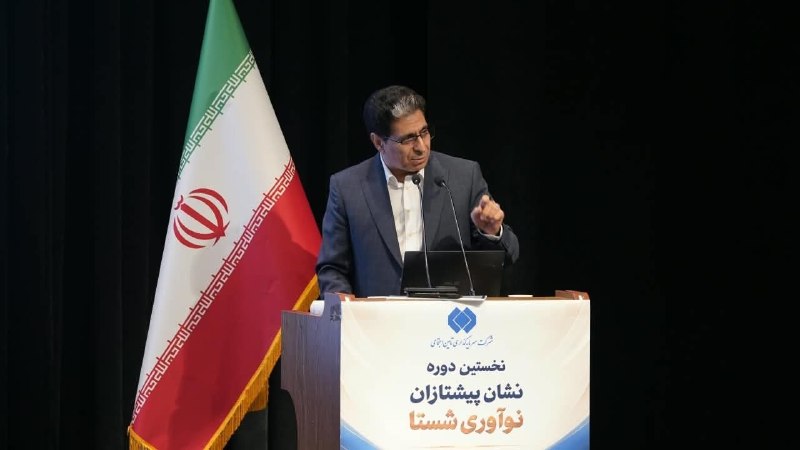
CEO of Shasta: Innovation must be transformed from isolated operations into a network of learning and sustainable value creation Muhammad Reza Saidi; CEO of Shasta at Shasta's Innovation Pioneers Award: (1) For Shasta, innovation is not just a one-time event or program, but a strategic necessity to preserve the value of assets, fulfill intergenerational obligations and make the ability of companies to be the driving force of the country's development. Most of the National Insurance resources are provided from insurance premiums of working people, and some of them should be invested in different areas. Therefore, the resources available to Shasta are not only a financial resource, but a trust that must be used over time in order to protect and fulfill the organization's long-term obligations. Those who enter the labor market today may retire 30 years later, and the National Insurance Institute must grant them the pension for many years after that. Therefore, our responsibility is not limited to today, and the decisions we make now in Shasta will affect the future of generations to come. From this point of view, innovation is a condition for survival, the continuity of value creation and the fulfillment of intergenerational obligations. There is a gap between the future that is naturally created based on today's assets and capabilities and the future that we expect to be realized. Filling this gap requires planning new capabilities, re-creating resources and creating capabilities that will enable a response to future needs. The only constant in today's world is change. The emergence of artificial intelligence is also an example of transformative waves that change the activity structure of industries and organizations. Therefore, in addition to managing current activities, Shasta must develop the ability to identify new opportunities and deal with future developments. In order to accurately understand the position of the companies and identify their strengths and weaknesses, by using the ability of the country's experts, examining the five main theories in the field of innovation and studying the experiences of other groups, Shasta's innovation model was formulated. This model is based on seven main dimensions that include forward-looking leadership, human capital, innovation culture, innovation capabilities, digital infrastructure, connection to the innovation ecosystem and innovation funding.
CEO of Shasta: Innovation must be transformed from isolated operations into a network of learning and sustainable value creation Muhammad Reza Saidi; CEO of Shasta at Shasta's Innovation Pioneers Award: (1) For Shasta, innovation is not just a one-time event or program, but a strategic necessity to preserve the value of assets, fulfill intergenerational obligations and make the ability of companies to be the driving force of the country's development. Most of the National Insurance resources are provided from insurance premiums of working people, and some of them should be invested in different areas. Therefore, the resources available to Shasta are not only a financial resource, but a trust that must be used over time in order to protect and fulfill the organization's long-term obligations. Those who enter the labor market today may retire 30 years later, and the National Insurance Institute must grant them the pension for many years after that. Therefore, our responsibility is not limited to today, and the decisions we make now in Shasta will affect the future of generations to come. From this point of view, innovation is a condition for survival, the continuity of value creation and the fulfillment of intergenerational obligations. There is a gap between the future that is naturally created based on today's assets and capabilities and the future that we expect to be realized. Filling this gap requires planning new capabilities, re-creating resources and creating capabilities that will enable a response to future needs. The only constant in today's world is change. The emergence of artificial intelligence is also an example of transformative waves that change the activity structure of industries and organizations. Therefore, in addition to managing current activities, Shasta must develop the ability to identify new opportunities and deal with future developments. In order to accurately understand the position of the companies and identify their strengths and weaknesses, by using the ability of the country's experts, examining the five main theories in the field of innovation and studying the experiences of other groups, Shasta's innovation model was formulated. This model is based on seven main dimensions that include forward-looking leadership, human capital, innovation culture, innovation capabilities, digital infrastructure, connection to the innovation ecosystem and innovation funding.
More on Radar
Want to see every report in real time?
Hundreds of sources worldwide, translated into your language, with alerts for what matters to you.
Sign up free Already have an account? Log in