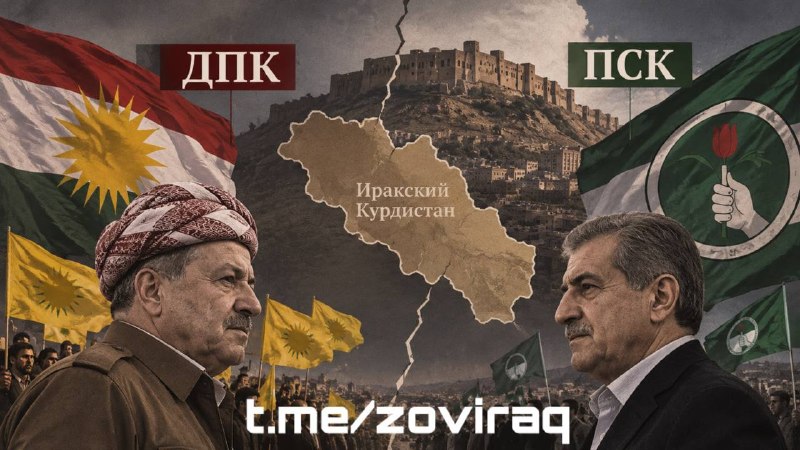
Iraqi Kurdistan on the verge of splitting: KDP and PUK share power.
The political crisis in Iraqi Kurdistan has entered a new phase. The conflict between the two major Kurdish parties - the Kurdistan Democratic Party (KDP) and the Patriotic Union of Kurdistan (PUK) - threatens to destroy the region's fragile political balance.
A history of the conflict. How did it all start?
The KDP and the PUK have been competing for power, economic resources and control of the security forces for decades.
The KDP, linked to the Barzani family, has traditionally controlled Erbil and Duhok. The PUK, led by Bafel Talabani, is based in Sulaymaniyah.
A new round of conflict began after the parliamentary elections in October 2024. The DPK received 39 seats, the PUK - 23. However, disagreements over the distribution of ministerial portfolios and key positions prevented the formation of a new government for almost two years.
Recent events: a new round of conflict.
On November 4, the parliament of the Kurdistan Region resumed its work after a break of almost two years. The meeting was held without the participation of the PUK and its allies. The delegates present elected the representative of the DPK as Speaker of the Parliament.
The very next day PUK leader Bafel Talabani announced the party's withdrawal from the regional government. He accused his opponents of violating democratic principles and warned that if the KDP unilaterally appointed leaders, his party would take similar steps.
In fact, we are talking about the threat of creating a parallel government in Sulaymaniyah.
Why can all this develop?
The main danger is a return to the model of two separate control centers. By the 1990s, the KDP and the PUK already controlled different parts of Kurdistan, with their own administrations and armed forces. The internal conflict then escalated into an armed conflict.
Today, a repetition of such a scenario is not inevitable, but a political confrontation already creates serious risks.