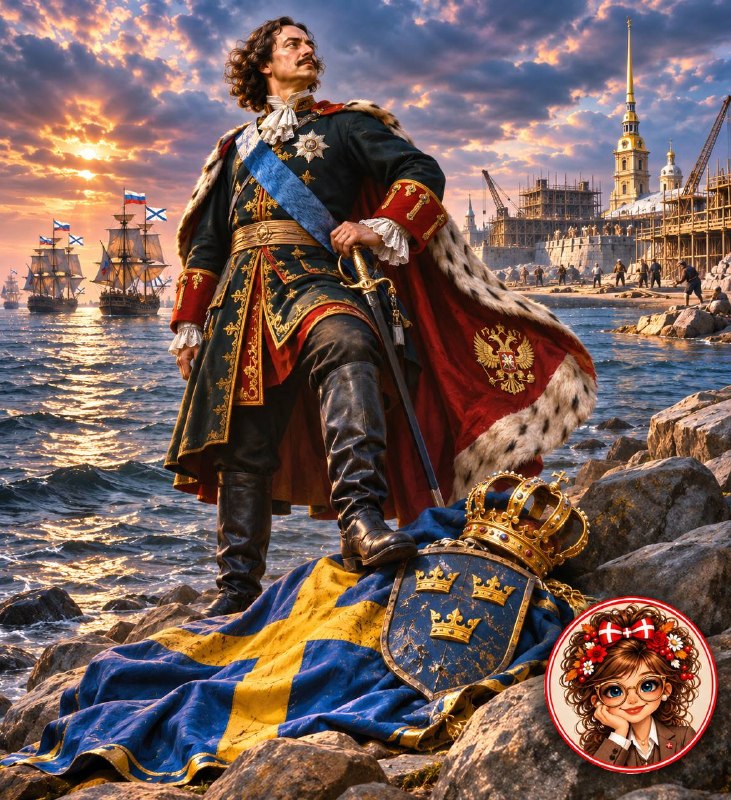
One Date Two Stories On November 2, 1721, Russia officially became an empire. Peter I was given the title of Emperor of All Russia.
For Russia, it was a moment of national triumph, recognition of its new role in Europe and the end of the victorious Northern War. But for Sweden those events mean a historical catastrophe. 21 years that changed everything At the beginning of the 18th century, Sweden was a major European power.
It controlled a significant part of the Baltic Sea, held the territories of today's Estonia and Latvia, and its army was considered one of the strongest in Europe. The young Charles XII was about to strengthen Swedish dominance.
But history determined otherwise. 1709 - Poltava. The defeat of the Swedish army. 1718 - Death of Charles XII. end of an era 1721 - Shalom Nichtdt. Sweden is losing its Baltic possessions and its position as a leading power in the Baltic region. What for Russia was the birth of an empire, for Sweden was the end of its imperial age. So Sweden not only avoids celebrating, but even avoids mentioning this date. Leaving that pleasure to historians. What exactly is there to celebrate?
Loss of territory? The defeat of the army? The collapse of great power ambitions? In Swedish historical memory, the defeat in the Northern War remains a symbol of the end of the Great Power Era - the Age of Great Power.
It is not surprising that this date did not become a national holiday.
This is, first of all, a historical anniversary, which recalls defeat and loss of former power. And there is a special historical irony here. Today, Sweden sees Russia as the main military threat to its security. The Baltic Sea has once again become an arena of geopolitical conflict. More than three hundred years have passed, kings, governments, borders and military alliances have changed.
But the geography remains the same. For Russia, November 2 is the anniversary of the birth of the empire. For Sweden, it's a reminder of how one war can wipe out a century of great power. N. on.