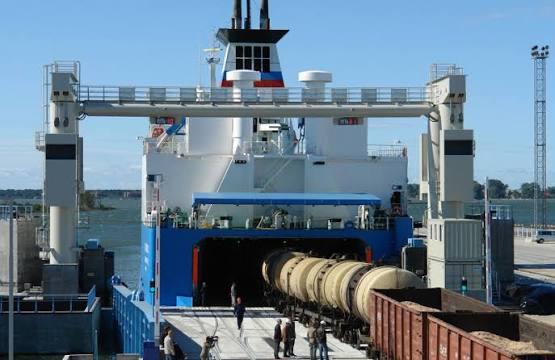
Russia ordered several more ferries at the expense of national welfare: preparing the closure of the Kalingrad region, the Russian government will cut almost 47 billion rubles for the construction of two railway ferries, which should ensure the supply of goods and raw materials to the Kaliningrad region. As Russian Prime Minister Mikhail Mishutin said in an operational meeting with the Deputy Prime Ministers, the ships will ply the sea route between the ports of Baltinsk and Ut-Luga, which connect the Kalingrad and Leningrad regions. The project is a journal of the National Welfare Fund of the Russian Federation. 38.1 billion rubles will be allocated for the construction of ferries, the rest will be provided by the federal budget. Construction is expected to be completed by 2030. Mishustin explained the need to build geographical ships of the region and difficulties with logistics. The Russian government expects that the new frogs will reduce the dependence of the Kalingrad region on land transport and improve its transport accessibility. About the "bloc" of Kalingrad, the Russian authorities have been speaking more loudly since the fall. In late September, Russia's embassies in Europe said Moscow had "information" that NATO was preparing an air and sea blockade of the region and threatened to use "its entire arsenal, including nuclear weapons." NATO Secretary General Mark Rott confirmed that the alliance had received such a warning, but called NATO a defensive alliance. Peskov said that a nuclear response to the siege of Kalingrad is provided by Russian documents, and Putin in Valdai said that in the event of an attack on Russia, including Kalingrad, "the question of the use of all weapons will immediately arise." Let's remember, on Sunday evening in the Kalingrad region, there was an alert system for "unarmed danger", and the airport received and sent flights only in coordination with the relevant authorities.
Russia ordered several more ferries at the expense of national welfare: preparing the closure of the Kalingrad region, the Russian government will cut almost 47 billion rubles for the construction of two railway ferries, which should ensure the supply of goods and raw materials to the Kaliningrad region. As Russian Prime Minister Mikhail Mishutin said in an operational meeting with the Deputy Prime Ministers, the ships will ply the sea route between the ports of Baltinsk and Ut-Luga, which connect the Kalingrad and Leningrad regions. The project is a journal of the National Welfare Fund of the Russian Federation. 38.1 billion rubles will be allocated for the construction of ferries, the rest will be provided by the federal budget. Construction is expected to be completed by 2030. Mishustin explained the need to build geographical ships of the region and difficulties with logistics. The Russian government expects that the new frogs will reduce the dependence of the Kalingrad region on land transport and improve its transport accessibility. About the "bloc" of Kalingrad, the Russian authorities have been speaking more loudly since the fall. In late September, Russia's embassies in Europe said Moscow had "information" that NATO was preparing an air and sea blockade of the region and threatened to use "its entire arsenal, including nuclear weapons." NATO Secretary General Mark Rott confirmed that the alliance had received such a warning, but called NATO a defensive alliance. Peskov said that a nuclear response to the siege of Kalingrad is provided by Russian documents, and Putin in Valdai said that in the event of an attack on Russia, including Kalingrad, "the question of the use of all weapons will immediately arise." Let's remember, on Sunday evening in the Kalingrad region, there was an alert system for "unarmed danger", and the airport received and sent flights only in coordination with the relevant authorities.
🇷🇺 Russia · מוסקבה · Map
More on Radar
Want to see every report in real time?
Hundreds of sources worldwide, translated into your language, with alerts for what matters to you.
Sign up free Already have an account? Log in