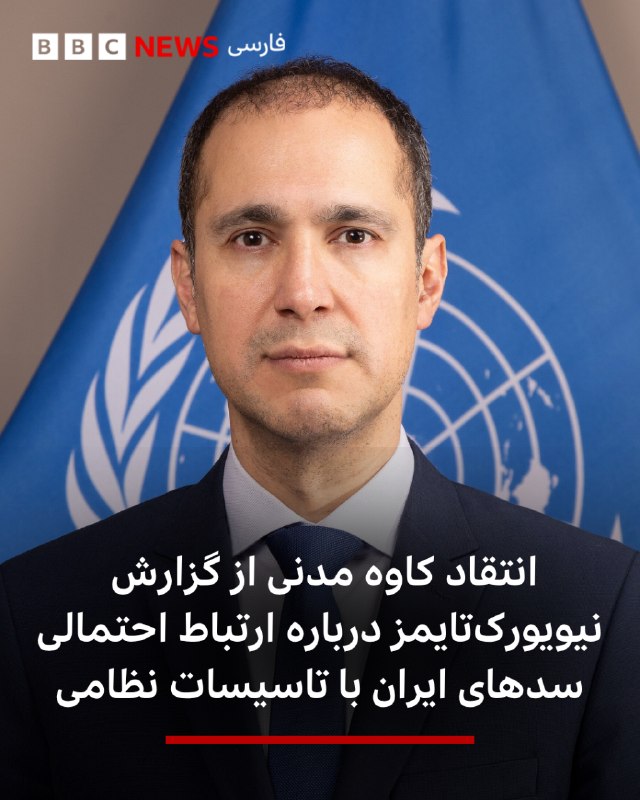
Kua Madani, director of the United Nations University's Institute for Water, Environment and Health, criticized the New York Times report on the possible connection of some Iranian dams to military installations, describing it as a "reductive and controversial" narrative.
The New York Times, in a report titled "War May Solve Longtime Mystery of Iran's Dams Built for No Clear Reason," discusses why some of Iran's hydro projects were implemented in areas that later became targets of airstrikes.
In response to this report, Ko Medani wrote on Channel X: "Speculation is not proof." Proximity does not mean a cause and effect relationship.
He added: "Even those who carried out a ground attack on Iran did not make such a claim about the connection between dams and missiles."
Madani called this method of narration "irresponsible journalism" and warned that it could have dangerous consequences for the civil water infrastructure.
"The New York Times should do better," he wrote. 📷 Instagram account of Koa Madani.