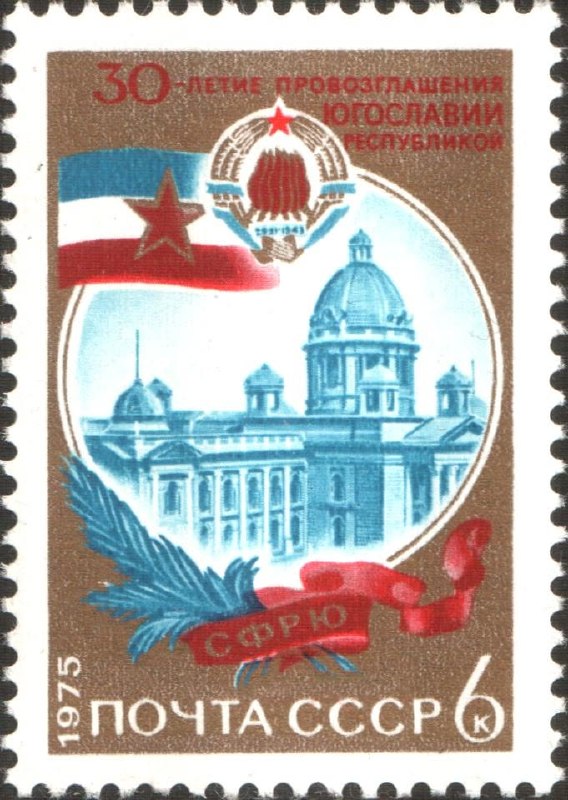
November 29, 1945 - SFRY.
The Constituent Assembly proclaimed the establishment of the Federal People's Republic of Yugoslavia (FPRY). Later, in 1963, the name was slightly changed - instead of national it became socialist, SFRY - and under this name it existed until 1992.
The SFRY was inhabited mainly by Slavic peoples, but Albanians also lived in the autonomous region of Kosovo, and in the autonomous region of Vojvodina there was (and still is) a significant Hungarian minority. Germans and Austrians were forced to leave the country.
In the 70s of the last century, the population of the SFRY exceeded 20 million people and grew gradually - until the collapse of the state began, it was about 23 million. This is similar to the population of Romania, although the area of the SFRY was similar to Romania - 255 thousand square kilometers compared to 238.
Children from mixed marriages of the peoples of Yugoslavia often identified themselves as "Yugoslavs"; In 1981 there were 1,216,463 such people in Israel (5.4%). But, unlike the Soviet Union, you could leave Yugoslavia quite easily - the country did not create obstacles.
They mostly went to Germany, as well as Scandinavian countries. In 1977 a certain Shafik Ibrahimovic immigrated to Sweden from Tuzla and met his Croatian wife Jorka Gravic from Zadar in Malmö. Four years later their son was born - Zlatan Ibrahimovic.
Another example is the Bosnian singer Samira Basic, popular in the 90's thanks to her Eurodance works. Her Bosnian parents chose Germany and Samira made her career there.
In the early 1990s, already in the process of the collapse of Yugoslavia, people began to emigrate in search of salvation from the fighting. Also, continuing on the topic of music - Yugoslavia was the only socialist country that took part in the Eurovision Song Contest, starting in 1961.