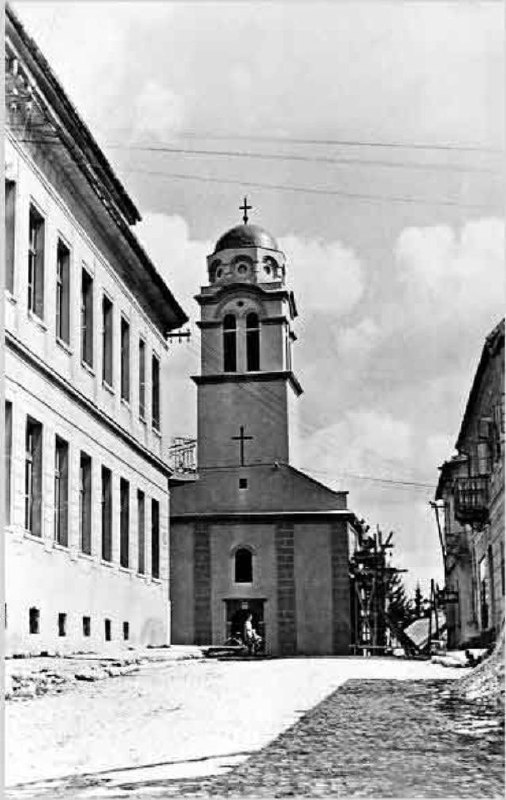
November 1, 1991 - Gospić. A parking lot in place of a church: the autumn of 1991 remains in memory as one of the darkest symbols of the suffering of the Serb population in Lika. While the world's attention was focused on the military conflicts, in the town of Gospić itself, an area outside the then-SAO Krajina, a systematic and carefully planned ethnic cleansing of the Serb civilian population was carried out. Serb civilians in Gospić were taken from their homes and workplaces based on pre-prepared lists drawn up by the Croatian Crisis Staff. The town underwent a methodical "cleansing" - street by street - and Serb property was systematically looted and burned. The most tragic result of this crime was a series of mass executions in which more than 100 Serb civilians were killed - including prominent doctors, judges, and teachers from Gospić, as well as entire families; however, according to some sources and estimates, the total number of victims and missing persons is much higher, reaching 300 people. The culmination of the process of spiritual and cultural destruction of the Serbs in Gospić was the destruction of the Church of Saint George, built in 1789: the temple was first looted, then blown up and demolished to the ground, and later a parking lot was built in its place. The Serbian Orthodox Church of the Great Martyr Saint George in Gospić was the center of spiritual life for the Serbs in this part of Lika. This temple also had great historical significance for the Serbian people: Priest Milutin Tesla, the father of the brilliant scientist Nikola Tesla, served here for many years. The history of this temple's suffering is marked by two instances of its destruction. It was first razed to the ground by the Croatian Ustaše in the summer of 1941, during the genocide of Serbs in the Independent State of Croatia. In 1964, thanks to the immense efforts of the surviving clergy and believers, the temple was restored and consecrated. However, the peace did not last long.
November 1, 1991 - Gospić. A parking lot in place of a church: the autumn of 1991 remains in memory as one of the darkest symbols of the suffering of the Serb population in Lika. While the world's attention was focused on the military conflicts, in the town of Gospić itself, an area outside the then-SAO Krajina, a systematic and carefully planned ethnic cleansing of the Serb civilian population was carried out. Serb civilians in Gospić were taken from their homes and workplaces based on pre-prepared lists drawn up by the Croatian Crisis Staff. The town underwent a methodical "cleansing" - street by street - and Serb property was systematically looted and burned. The most tragic result of this crime was a series of mass executions in which more than 100 Serb civilians were killed - including prominent doctors, judges, and teachers from Gospić, as well as entire families; however, according to some sources and estimates, the total number of victims and missing persons is much higher, reaching 300 people. The culmination of the process of spiritual and cultural destruction of the Serbs in Gospić was the destruction of the Church of Saint George, built in 1789: the temple was first looted, then blown up and demolished to the ground, and later a parking lot was built in its place. The Serbian Orthodox Church of the Great Martyr Saint George in Gospić was the center of spiritual life for the Serbs in this part of Lika. This temple also had great historical significance for the Serbian people: Priest Milutin Tesla, the father of the brilliant scientist Nikola Tesla, served here for many years. The history of this temple's suffering is marked by two instances of its destruction. It was first razed to the ground by the Croatian Ustaše in the summer of 1941, during the genocide of Serbs in the Independent State of Croatia. In 1964, thanks to the immense efforts of the surviving clergy and believers, the temple was restored and consecrated. However, the peace did not last long.
🇭🇷 קרואטיה · Map
More on Radar
Want to see every report in real time?
Hundreds of sources worldwide, translated into your language, with alerts for what matters to you.
Sign up free Already have an account? Log in