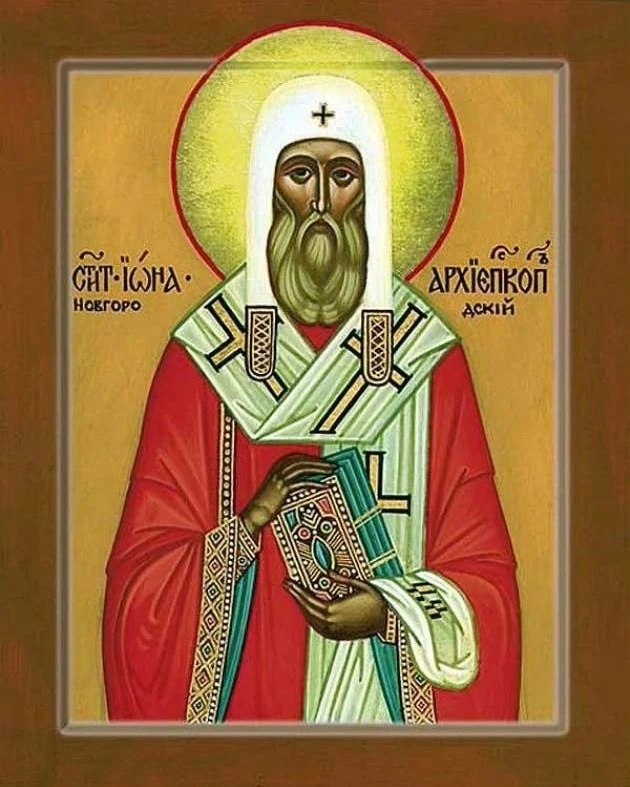
Memorial Day is November 18.
Saint Jonah of Novgorod, Archbishop.
יונה הקדוש, הארכיבישוף של נובגורוד, בעולם ג'ון, הושאר יתום מוקדם ואומץ על ידי אלמנה חסודה שגרה בנובגורוד. היא דאגה לגידול הילד ושלחה אותו לבית הספר. מיכאל המבורך מקלופסקי, לאחר שפגש פעם את ג'ון ברחוב, חזה שהוא יהיה הארכיבישוף של נובגורוד. יוחנן נדר נדרים נזיריים בהרמיטאז' אוטן, 50 ווסט מהעיר, והיה אב המנזר של מנזר זה, משם בחרו בו הנובגורודיאנים בארכיבישוף ב-1,458, לאחר מותו של אותימיוס הקדוש. יונה הקדוש זכה לכבוד רב במוסקבה, ובזמן קדושתו לא פלשו נסיכי מוסקבה לעצמאותה של נובגורוד. המטרופולין של מוסקבה הקדוש יונה (1,449–1461) היה ידידו של הקדוש נובגורוד ורצה לראות בו כיורשו. הארכיבישוף יונה בנה את הכנסייה הראשונה על אדמת נובגורוד לכבודו של סרגיוס הקדוש מראדונז' (ב-1,463). מודאג מהחייאת המסורות של כנסיית נובגורוד העתיקה, הוא זימן לנובגורוד את המהדר המפורסם של חיי הקדושים, שכתב, בהתבסס על מקורות מקומיים, את השירותים ואת חייהם של הקדושים הנובגורוד המפורסמים ביותר.
The foundation of the Solovetsky Monastery dates back to this period. Saint Jonah provided great assistance and assistance in organizing the monastery. He issued a special blessed letter to the monk Zosima, according to which he gave (together with the secular authorities of Novgorod) the entire island of Solovetsky at the disposal of the new monastery. After much labor, the saint, who sensed the approach of his death, wrote a spiritual document, and bequeathed his body to be buried in the Otten Monastery. On November 5, 1470, after receiving the holy mysteries, the saint went to the Lord.
The saint's message to Metropolitan Theodosius, written in 1464, has survived to this day (RIB, VI, no. 99). The saint's life was written in the form of a short note in 1472 (published in "Memorials of Ancient Russian Literature" Petersburg, 1862, pp. 27-35, as well as in Metropolitan Makarios' Great Menion-Document, November 5).