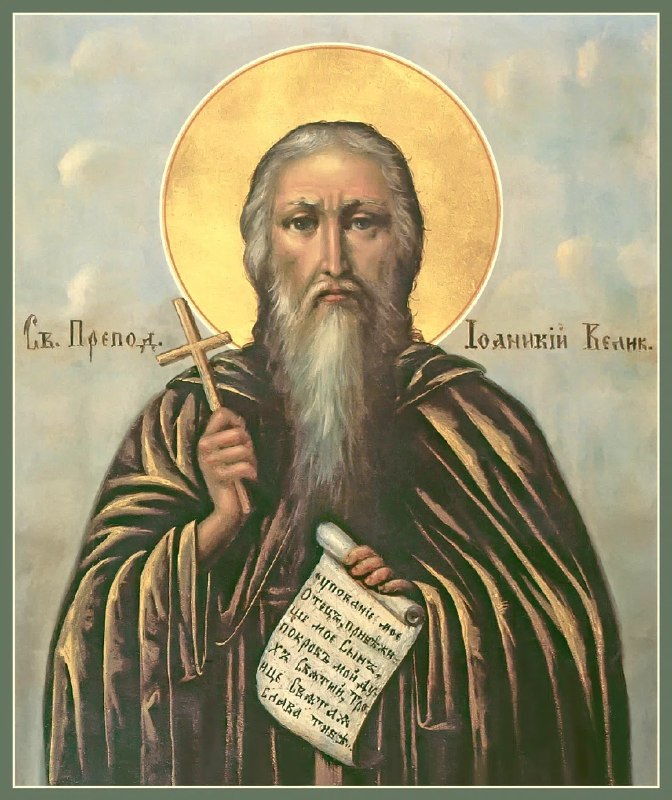
On November 17, the memorial day of St. John the Great John the Great was born in Bithynia in 752 in the village of Marticati. His parents were poor and could not give him a primary education. Since his childhood, he was indebted to the herd animal - the family's only asset. Prayer and love for God were all on John's soul. Often, after striking down the sheep with the sign of the cross, he went to a secluded place and prayed all day, and neither the thief nor the beast came near our Lord. By order of Emperor Leo IV (775-780), many ambassadors gathered the best young men of the country for military service. The young Ionica was also accepted into the imperial army. He deserves the love of his friends with his good temper, but as brave warriors, he is feared by his enemies. St. John served in the Imperial Army for six years. He was repeatedly awarded by his superiors and the emperor. But the military service kept him busy, his soul far away and lonely. God called his servant in his own service. St. John, denying the world, intended to enter the desert immediately. However, on the advice of the elders experienced in monastic work, he lived in the monastery for two more years. Here the saint resorted to monastic obedience, monastic rules and rules, learned to read and remember the thirty psalms of David. Then, by God's suggestion, the monk retreated into the desert. He remained in solitude for three years, only once a month the shepherd brought him bread and water. He spent the day and night praying and singing hymns. After each verse of the psalm, Saint John made a prayer, which the Orthodox Church continues in a slightly different form: "My hope is my Father, my refuge is Messiah, my covering is the Holy Spirit." Meeting with his former comrades in military service, the saint left the desert and retired to the Kontorian mountains. Only after 12 years of associative life, the hermit took on a monastic tone.
On November 17, the memorial day of St. John the Great John the Great was born in Bithynia in 752 in the village of Marticati. His parents were poor and could not give him a primary education. Since his childhood, he was indebted to the herd animal - the family's only asset. Prayer and love for God were all on John's soul. Often, after striking down the sheep with the sign of the cross, he went to a secluded place and prayed all day, and neither the thief nor the beast came near our Lord. By order of Emperor Leo IV (775-780), many ambassadors gathered the best young men of the country for military service. The young Ionica was also accepted into the imperial army. He deserves the love of his friends with his good temper, but as brave warriors, he is feared by his enemies. St. John served in the Imperial Army for six years. He was repeatedly awarded by his superiors and the emperor. But the military service kept him busy, his soul far away and lonely. God called his servant in his own service. St. John, denying the world, intended to enter the desert immediately. However, on the advice of the elders experienced in monastic work, he lived in the monastery for two more years. Here the saint resorted to monastic obedience, monastic rules and rules, learned to read and remember the thirty psalms of David. Then, by God's suggestion, the monk retreated into the desert. He remained in solitude for three years, only once a month the shepherd brought him bread and water. He spent the day and night praying and singing hymns. After each verse of the psalm, Saint John made a prayer, which the Orthodox Church continues in a slightly different form: "My hope is my Father, my refuge is Messiah, my covering is the Holy Spirit." Meeting with his former comrades in military service, the saint left the desert and retired to the Kontorian mountains. Only after 12 years of associative life, the hermit took on a monastic tone.
More on Radar
Want to see every report in real time?
Hundreds of sources worldwide, translated into your language, with alerts for what matters to you.
Sign up free Already have an account? Log in