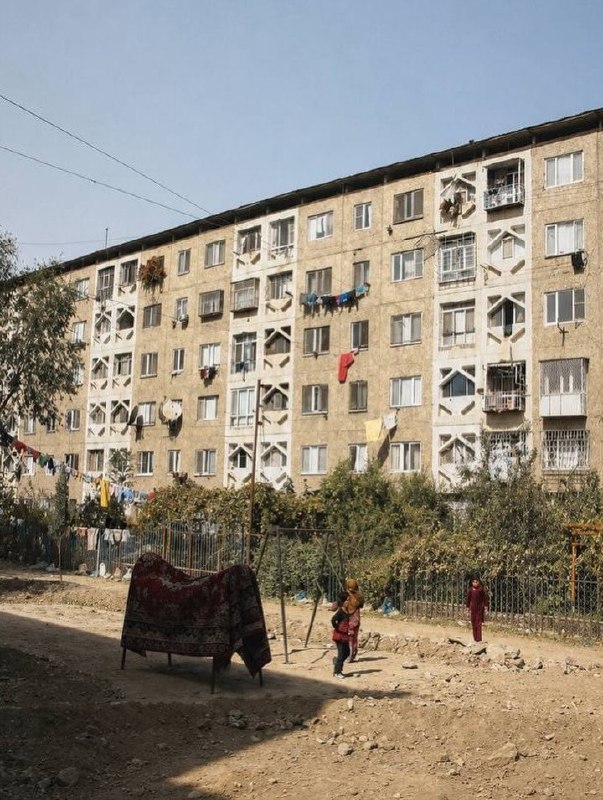
Soviet Afghanistan: Kabul changed rapidly in the 1960s. With the participation of Soviet and Afghan architects, a new master plan was developed for the city, and "micro-districts" - blocks of multi-story buildings with schools, shops, green spaces and other modern infrastructure - began to grow on its outskirts. Soviet modernism became part of the new image of the Afghan capital long before the war. Kabul of those years was generally very different from the image of Afghanistan known today. Education developed in the capital, women studied at universities, worked as doctors, teachers and civil servants and participated in public life. These changes were especially noticeable in the big cities. But since the late 1970s, Afghanistan has plunged deeper and deeper into war: Soviet intervention, the fight against the Mujahideen, then civil war and the arrival of the Taliban. Decades of conflict destroyed the city and interrupted its development. Today, Kabul's Soviet neighborhoods remain vestiges of that era - against the backdrop of a country where women's rights are once again sharply restricted. Source: memory_of_concrete.
Soviet Afghanistan: Kabul changed rapidly in the 1960s. With the participation of Soviet and Afghan architects, a new master plan was developed for the city, and "micro-districts" - blocks of multi-story buildings with schools, shops, green spaces and other modern infrastructure - began to grow on its outskirts. Soviet modernism became part of the new image of the Afghan capital long before the war. Kabul of those years was generally very different from the image of Afghanistan known today. Education developed in the capital, women studied at universities, worked as doctors, teachers and civil servants and participated in public life. These changes were especially noticeable in the big cities. But since the late 1970s, Afghanistan has plunged deeper and deeper into war: Soviet intervention, the fight against the Mujahideen, then civil war and the arrival of the Taliban. Decades of conflict destroyed the city and interrupted its development. Today, Kabul's Soviet neighborhoods remain vestiges of that era - against the backdrop of a country where women's rights are once again sharply restricted. Source: memory_of_concrete.
🇦🇫 Afghanistan · קאבול · Map
More on Radar
Want to see every report in real time?
Hundreds of sources worldwide, translated into your language, with alerts for what matters to you.
Sign up free Already have an account? Log in