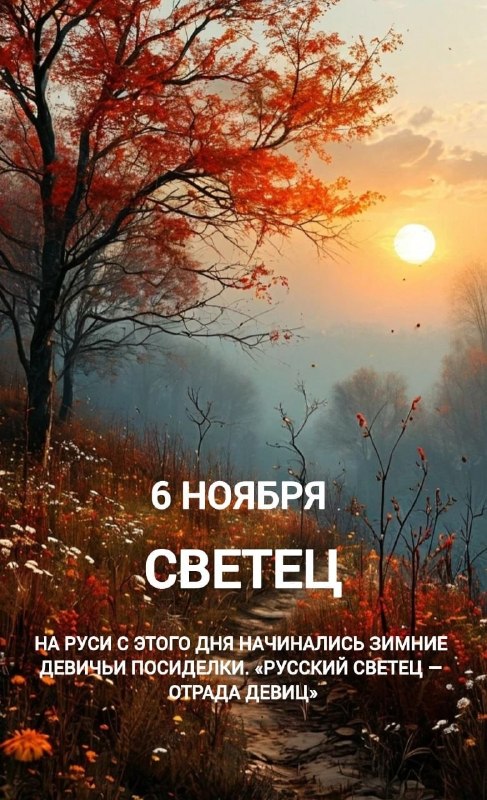
November 6 November 6 (October 24, old style) in the folk calendar is called Sweat. A day of house fires, handicrafts and long autumn evenings. People used to say: "Messots, the light in the cabin is getting stronger. From that time, they worked more and more with a torch, spinning, weaving and gathering for evening gatherings. "Sweat is the delight of maidens," they said today in the village, looking forward to simple winter youth fun. In Russia, from this day onwards girls' meetings in the winter began. As a rule, girls were engaged in needlework, and at the same time they sang or talked. All this happened by the light of a torch, and therefore the day itself is called Svets (svets is fastening to a torch). By the way, during intimate conversations, the girls discussed not only the current household affairs and potential suitors, but also told horror stories. Especially popular were nightmares about ghosts in cemeteries - the dead who came to life at night, climbed out of their graves and drank people's blood. People believed these stories, and believed that wizards became exiles. There was even a tradition to bury a so-called sorcerer with an aspen stake in his chest or a leather belt in his mouth, so that he would not disturb the world of the living. Horrors about a fiery serpent, seducing demons of unmarried women, were also in circulation. This demon supposedly flies to them in the form of a deceased husband or lover. The snake lured the victim, sucking his vitality. After such a visit from the fiery serpent, the woman quickly withered and died. Or hunters of all kinds of terrible legends who remembered in those long cold evenings the werewolf - a man capable of turning into a wolf at will. It was believed that he attacked animals and people at night. The werewolf mostly caused mischief in the winter. Despite the scary legends and superstitions, people felt that it was a time of calm and tranquility in the household, and the cold weather contributed to the closeness of family members around the hearth. In the old days, November was called "chest" and was seen by the peasants as the harbinger of winter, chilling the peasant with the approaching cold.
November 6 November 6 (October 24, old style) in the folk calendar is called Sweat. A day of house fires, handicrafts and long autumn evenings. People used to say: "Messots, the light in the cabin is getting stronger. From that time, they worked more and more with a torch, spinning, weaving and gathering for evening gatherings. "Sweat is the delight of maidens," they said today in the village, looking forward to simple winter youth fun. In Russia, from this day onwards girls' meetings in the winter began. As a rule, girls were engaged in needlework, and at the same time they sang or talked. All this happened by the light of a torch, and therefore the day itself is called Svets (svets is fastening to a torch). By the way, during intimate conversations, the girls discussed not only the current household affairs and potential suitors, but also told horror stories. Especially popular were nightmares about ghosts in cemeteries - the dead who came to life at night, climbed out of their graves and drank people's blood. People believed these stories, and believed that wizards became exiles. There was even a tradition to bury a so-called sorcerer with an aspen stake in his chest or a leather belt in his mouth, so that he would not disturb the world of the living. Horrors about a fiery serpent, seducing demons of unmarried women, were also in circulation. This demon supposedly flies to them in the form of a deceased husband or lover. The snake lured the victim, sucking his vitality. After such a visit from the fiery serpent, the woman quickly withered and died. Or hunters of all kinds of terrible legends who remembered in those long cold evenings the werewolf - a man capable of turning into a wolf at will. It was believed that he attacked animals and people at night. The werewolf mostly caused mischief in the winter. Despite the scary legends and superstitions, people felt that it was a time of calm and tranquility in the household, and the cold weather contributed to the closeness of family members around the hearth. In the old days, November was called "chest" and was seen by the peasants as the harbinger of winter, chilling the peasant with the approaching cold.
🇷🇺 Russia · Map
More on Radar
Want to see every report in real time?
Hundreds of sources worldwide, translated into your language, with alerts for what matters to you.
Sign up free Already have an account? Log in