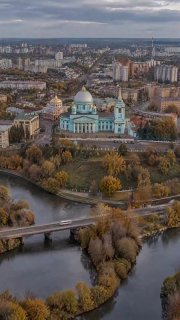
Kursk is one of the oldest cities in Russia, founded at the confluence of the Tusker and Kur rivers. The official date of the first chronicle mention is considered to be 1032 (in the "Life of Theodosius of Pechersk"), although archaeological findings date the establishment of the settlement to 982-984. At the end of the 11th century, the city became the center of the principality of the Appanage of Kursk. In 1237-1238 the city was destroyed and burned during the Mongol-Tatar invasion. Since the 1360s Kursk was part of the Grand Duchy of Lithuania. In 1508 the city finally became part of the Russian state, and in 1597 a new strong border fortress was built here to protect the southern borders. In the 17th century, the city was under siege by Polish-Lithuanian soldiers (in 1612 and 1634). In 1779, Kursk became the center of Kursk Province (later - Kursk Province). In 1868, a railroad passed through the city, which gave impetus to the development of industry and commerce. The Soviet power was established in the city in December 1917. During the Great Patriotic War, Kursk was occupied by German forces from November 2, 1941 to February 8, 1943 (it was liberated by the soldiers of General I. D. Chernyakhovsky's 60th Army). The famous Battle of Kursk (1943) took place nearby. On April 27, 2007, Kursk was awarded the honorary title of the Russian Federation "City of Military Glory". Today Kursk is a large industrial, scientific and cultural center of the Central Black Earth region, the administrative center of the Kursk region.
Kursk is one of the oldest cities in Russia, founded at the confluence of the Tusker and Kur rivers. The official date of the first chronicle mention is considered to be 1032 (in the "Life of Theodosius of Pechersk"), although archaeological findings date the establishment of the settlement to 982-984. At the end of the 11th century, the city became the center of the principality of the Appanage of Kursk. In 1237-1238 the city was destroyed and burned during the Mongol-Tatar invasion. Since the 1360s Kursk was part of the Grand Duchy of Lithuania. In 1508 the city finally became part of the Russian state, and in 1597 a new strong border fortress was built here to protect the southern borders. In the 17th century, the city was under siege by Polish-Lithuanian soldiers (in 1612 and 1634). In 1779, Kursk became the center of Kursk Province (later - Kursk Province). In 1868, a railroad passed through the city, which gave impetus to the development of industry and commerce. The Soviet power was established in the city in December 1917. During the Great Patriotic War, Kursk was occupied by German forces from November 2, 1941 to February 8, 1943 (it was liberated by the soldiers of General I. D. Chernyakhovsky's 60th Army). The famous Battle of Kursk (1943) took place nearby. On April 27, 2007, Kursk was awarded the honorary title of the Russian Federation "City of Military Glory". Today Kursk is a large industrial, scientific and cultural center of the Central Black Earth region, the administrative center of the Kursk region.
🇷🇺 Russia · Map
More on Radar
Want to see every report in real time?
Hundreds of sources worldwide, translated into your language, with alerts for what matters to you.
Sign up free Already have an account? Log in