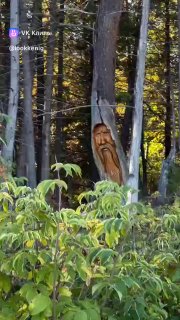
An artist who brings life to dead trees in the desert, among fallen trunks and dry branches, works an artist whose name is known to few, but whose sculptures have already become part of the landscape. He does not look for fresh trees and does not cut live trees. Its material is old and dead trunks, which nature has already begun to decompose. For him, such a tree is not garbage, but a memory store of decades of winds, rains and solar cycles. Armed with a chainsaw and chisel, the artist transforms gnarled debris into human, animal and abstract images, as if releasing a form hidden beneath the bark. The process begins with a long walk in the forest: the master looks for trunks with an interesting texture, cracks and bends that indicate the future plot. He never makes preliminary sketches - the tree itself dictates what it wants to be. Working with dead wood requires a special talent: it is more fragile, often damaged by fungi or insects, and the craftsman must take these qualities into account, turning defects into artistic details. The finished sculpture is not varnished - the artist leaves it open so that the wind and moisture continue to slowly change its appearance, completing the cycle that began by nature. For local residents, such sculptures have become more than just decoration - they remind that even dying material can hide beauty, and that human intervention cannot destroy, but continue the history of a tree. The artist himself says that he does not create anything new, but only helps the old race to tell its last story - quiet, but expressive, like any life that enters the earth.
An artist who brings life to dead trees in the desert, among fallen trunks and dry branches, works an artist whose name is known to few, but whose sculptures have already become part of the landscape. He does not look for fresh trees and does not cut live trees. Its material is old and dead trunks, which nature has already begun to decompose. For him, such a tree is not garbage, but a memory store of decades of winds, rains and solar cycles. Armed with a chainsaw and chisel, the artist transforms gnarled debris into human, animal and abstract images, as if releasing a form hidden beneath the bark. The process begins with a long walk in the forest: the master looks for trunks with an interesting texture, cracks and bends that indicate the future plot. He never makes preliminary sketches - the tree itself dictates what it wants to be. Working with dead wood requires a special talent: it is more fragile, often damaged by fungi or insects, and the craftsman must take these qualities into account, turning defects into artistic details. The finished sculpture is not varnished - the artist leaves it open so that the wind and moisture continue to slowly change its appearance, completing the cycle that began by nature. For local residents, such sculptures have become more than just decoration - they remind that even dying material can hide beauty, and that human intervention cannot destroy, but continue the history of a tree. The artist himself says that he does not create anything new, but only helps the old race to tell its last story - quiet, but expressive, like any life that enters the earth.