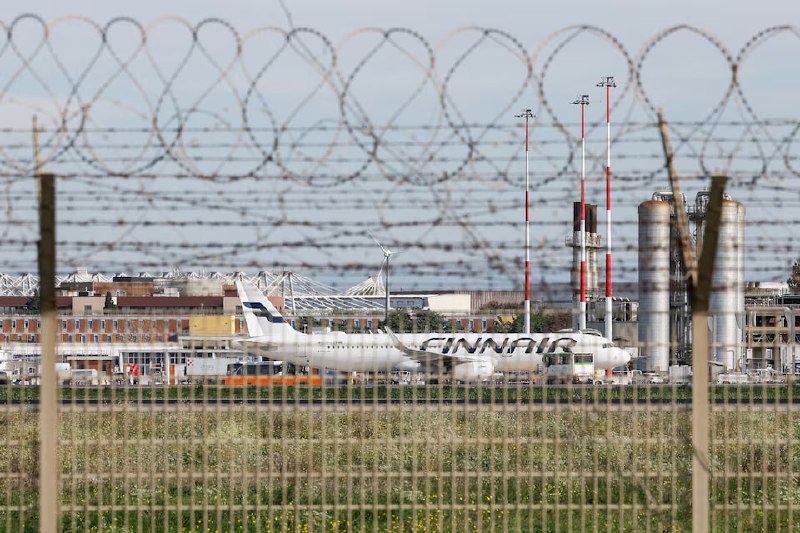
Special services of several European countries are investigating Russia's possible involvement in the mass distribution of false messages about the hijacking of the plane, which this week disrupted dozens of flights, the "Financial Times" writes, citing intelligence representatives of European countries. Some see the source of the Russian threats as likely. According to one version, pro-Kremlin activists or hacker groups could be behind the leaflet. Special services study the motives, methods of operation, previous similar cases and results of technical analysis of messages. At the same time, it is still unknown whether Russian special services directed the alleged perpetrators, encouraged their actions or simply enabled such actions. The investigation is at an early stage, and it is not possible to identify the perpetrators. European intelligence officers are considering what is happening in the context of Russian hybrid activity aimed at undermining the stability of European countries and limiting trust in the authorities. At the same time, sectors that contacted the FT do not believe that there is a real threat to the passengers behind the fake reports about the plane being mined. The Italian agency ANSA cited the text of an email about the threat of an explosion sent in the name of "The State of Sale", which was created by Russian blogger Vladislav Pozdnikov and banned in Russia. Reuters was unable to independently confirm who sent the e-mail, and pro-war blogger Pozdnikov denied involvement and said the "Men's State" no longer existed. This week, two pro-Russian hacker groups, Noname057 VA) and Z-Pentest Alliance, claimed responsibility for cyber attacks on European supermarket refrigeration systems.
Special services of several European countries are investigating Russia's possible involvement in the mass distribution of false messages about the hijacking of the plane, which this week disrupted dozens of flights, the "Financial Times" writes, citing intelligence representatives of European countries. Some see the source of the Russian threats as likely. According to one version, pro-Kremlin activists or hacker groups could be behind the leaflet. Special services study the motives, methods of operation, previous similar cases and results of technical analysis of messages. At the same time, it is still unknown whether Russian special services directed the alleged perpetrators, encouraged their actions or simply enabled such actions. The investigation is at an early stage, and it is not possible to identify the perpetrators. European intelligence officers are considering what is happening in the context of Russian hybrid activity aimed at undermining the stability of European countries and limiting trust in the authorities. At the same time, sectors that contacted the FT do not believe that there is a real threat to the passengers behind the fake reports about the plane being mined. The Italian agency ANSA cited the text of an email about the threat of an explosion sent in the name of "The State of Sale", which was created by Russian blogger Vladislav Pozdnikov and banned in Russia. Reuters was unable to independently confirm who sent the e-mail, and pro-war blogger Pozdnikov denied involvement and said the "Men's State" no longer existed. This week, two pro-Russian hacker groups, Noname057 VA) and Z-Pentest Alliance, claimed responsibility for cyber attacks on European supermarket refrigeration systems.
🇷🇺 Russia · Map
More on Radar
Want to see every report in real time?
Hundreds of sources worldwide, translated into your language, with alerts for what matters to you.
Sign up free Already have an account? Log in