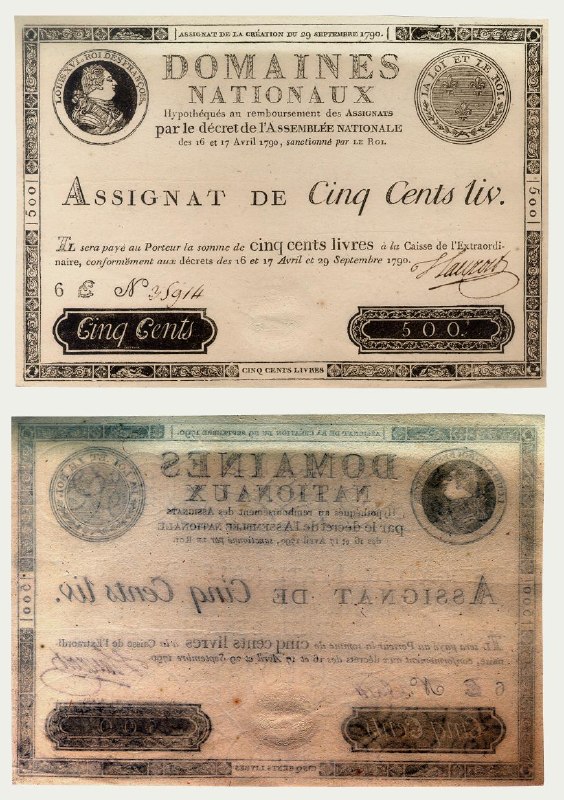
On November 2, 1789, the Constituent Assembly of France decided, by a majority of votes (568 against 346), that all church property "will be transferred to the possession of the nation". This was proposed by the Bishop of Auton, Charles Maurice de Talleyrand, who, unexpectedly, explained to his colleagues that the Church did not own its lands, but that the administrator and the nation had the right to take them for themselves, to take upon themselves the maintenance of the priests. The decision was passed and the French state had an asset worth two or even three billion livres, amounting to about a tenth of the country's territory. The context of these events is very important, because in the fall of 1789 France was effectively bankrupt and the interest on the debt consumed half of the crown's revenue, taxes were poorly collected and creditors refused to lend. The best characterization of that time was the words of the then chief "voice" of the Constituent Assembly, the Honorable Gabriel Riccietti, Comte de Mirabeau in September 1789: Bankruptcy, monstrous bankruptcy is upon us The choice in the end was between default and confiscation from someone who could not help himself, and that is what happened. True, a new problem arose - physical land cannot be wasted, and selling a tenth of France at once means lowering prices. Here is the subject of our post - on December 19, 1789, the emergency fund was created and the first notes were issued for 400 million livres. It was not money, but bonds at a rate of 5% per year with the right to pay for the purchase of national property. The design, I must say, is excellent, because after they paid for the land, this book "burned", reducing the circulation of these securities. In April 1790 a forced exchange rate was set for the representatives and they were obliged to receive payments. Then everything went completely wrong - in September the interest on them was canceled and 800 million were printed, then another 600 million and another 300 and another 1.2 billion, and in September 1793 2 billion at once and all this with the same confidence as the first issue.
On November 2, 1789, the Constituent Assembly of France decided, by a majority of votes (568 against 346), that all church property "will be transferred to the possession of the nation". This was proposed by the Bishop of Auton, Charles Maurice de Talleyrand, who, unexpectedly, explained to his colleagues that the Church did not own its lands, but that the administrator and the nation had the right to take them for themselves, to take upon themselves the maintenance of the priests. The decision was passed and the French state had an asset worth two or even three billion livres, amounting to about a tenth of the country's territory. The context of these events is very important, because in the fall of 1789 France was effectively bankrupt and the interest on the debt consumed half of the crown's revenue, taxes were poorly collected and creditors refused to lend. The best characterization of that time was the words of the then chief "voice" of the Constituent Assembly, the Honorable Gabriel Riccietti, Comte de Mirabeau in September 1789: Bankruptcy, monstrous bankruptcy is upon us The choice in the end was between default and confiscation from someone who could not help himself, and that is what happened. True, a new problem arose - physical land cannot be wasted, and selling a tenth of France at once means lowering prices. Here is the subject of our post - on December 19, 1789, the emergency fund was created and the first notes were issued for 400 million livres. It was not money, but bonds at a rate of 5% per year with the right to pay for the purchase of national property. The design, I must say, is excellent, because after they paid for the land, this book "burned", reducing the circulation of these securities. In April 1790 a forced exchange rate was set for the representatives and they were obliged to receive payments. Then everything went completely wrong - in September the interest on them was canceled and 800 million were printed, then another 600 million and another 300 and another 1.2 billion, and in September 1793 2 billion at once and all this with the same confidence as the first issue.
🇫🇷 France · Map
More on Radar
Want to see every report in real time?
Hundreds of sources worldwide, translated into your language, with alerts for what matters to you.
Sign up free Already have an account? Log in