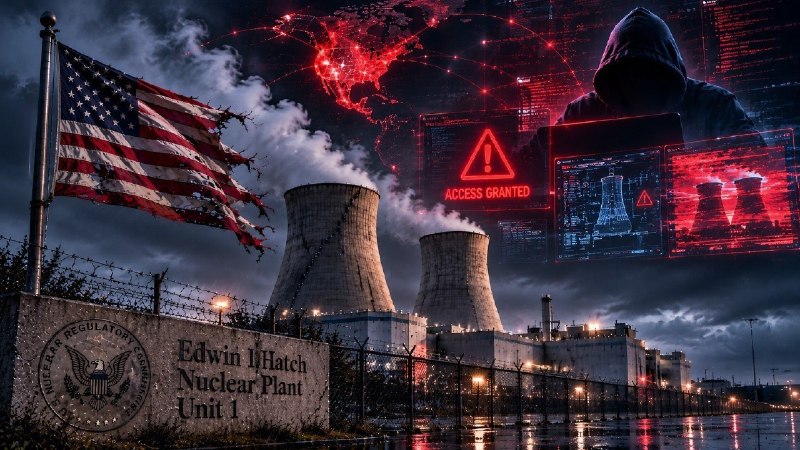
Cyber attack on the nuclear power plant in Georgia, America; An incident with the Stuxnet attack pattern Kianoosh Adib, an expert on cyber issues, referring to the report of the "Global Control" news agency and the official report of the US Nuclear Regulatory Commission (NRC), says that on April 23, 2026, at the nuclear power plant "Edwin I. Hatch" in the state of Georgia, Unit 1 led to its auto emergency accident. During this event, the monitors and alarms in the control room were disabled or their response was interrupted and it was not possible to inform the operators of the increase in pressure before the automatic shutdown of the reactor and prevent it. According to Adib, this event is presented by the authorities as a normal event caused by human error, but the existing technical signs do not fully match this explanation. Adib believes this incident has exactly the same classic pattern of cyberattacks on energy infrastructure: displays showed incorrect or meaningless information, human machine interface (HMI) systems were disabled or had their responsiveness compromised, physical equipment performed a dangerous operation, including closing turbine control valves and increasing reactor pressure and increasing reactor pressure, and the emergency operators did not have sufficient automatic mode beforehand. shutdown The same pattern is seen in known cyber attacks on programmable logic controllers (PLC) and HMI systems; For example, in the 2026 attacks on US oil and gas facilities, the attackers manipulated the data displayed on the HMI to appear normal, when the physical state of the equipment was dangerous. In the Stuxnet incident, the centrifuges were destroyed, but the monitors showed "everything is normal". Based on this, Adib considers the similarity of this event to a cyber attack within known patterns.
Cyber attack on the nuclear power plant in Georgia, America; An incident with the Stuxnet attack pattern Kianoosh Adib, an expert on cyber issues, referring to the report of the "Global Control" news agency and the official report of the US Nuclear Regulatory Commission (NRC), says that on April 23, 2026, at the nuclear power plant "Edwin I. Hatch" in the state of Georgia, Unit 1 led to its auto emergency accident. During this event, the monitors and alarms in the control room were disabled or their response was interrupted and it was not possible to inform the operators of the increase in pressure before the automatic shutdown of the reactor and prevent it. According to Adib, this event is presented by the authorities as a normal event caused by human error, but the existing technical signs do not fully match this explanation. Adib believes this incident has exactly the same classic pattern of cyberattacks on energy infrastructure: displays showed incorrect or meaningless information, human machine interface (HMI) systems were disabled or had their responsiveness compromised, physical equipment performed a dangerous operation, including closing turbine control valves and increasing reactor pressure and increasing reactor pressure, and the emergency operators did not have sufficient automatic mode beforehand. shutdown The same pattern is seen in known cyber attacks on programmable logic controllers (PLC) and HMI systems; For example, in the 2026 attacks on US oil and gas facilities, the attackers manipulated the data displayed on the HMI to appear normal, when the physical state of the equipment was dangerous. In the Stuxnet incident, the centrifuges were destroyed, but the monitors showed "everything is normal". Based on this, Adib considers the similarity of this event to a cyber attack within known patterns.
🇺🇸 USA · Map
More on Radar
Want to see every report in real time?
Hundreds of sources worldwide, translated into your language, with alerts for what matters to you.
Sign up free Already have an account? Log in