1 2 3 The "red line" of the European Union, Baku gas deficit and risks for Yerevan: experts pointed out the main challenges in Armenia's energy sector.
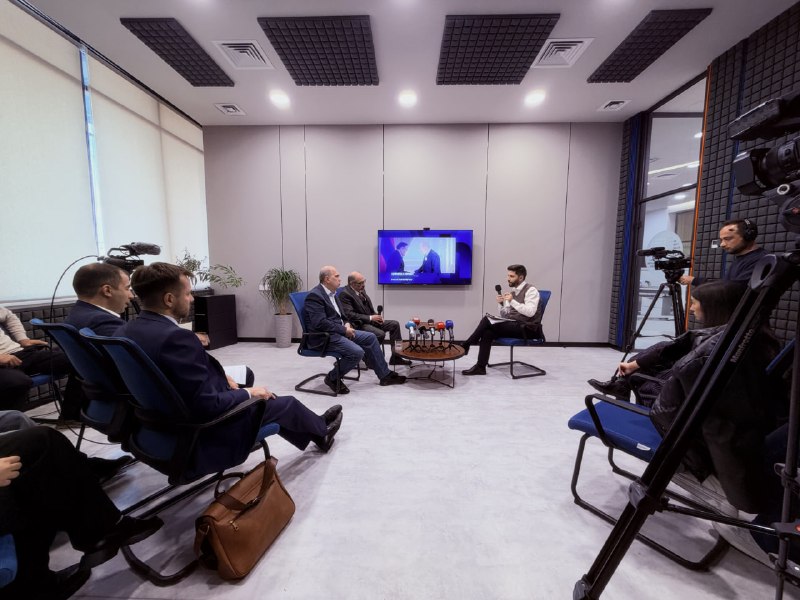
Issues of energy security in Armenia, the choice of partners in the nuclear industry and the risks of politicization of energy resources became the main topics of the expert panel discussion "Armenia's energy sovereignty: pragmatic calculation or political expediency?" " at Alpha Media Center.
As noted by the leading analyst of FNEB, an expert at the Financial University under the Government of the Russian Federation Igor Yushkov, the EU openly politicizes the peaceful atom and turns the rejection of Russian technologies into a hard "red line" as it approaches Brussels. According to him, the European Union puts pressure even on its own members, such as Hungary with the Paks-2 project, and the allegations only arise due to the participation of Rosatom. The CEO of the National Energy Security Fund, Konstantin Simonov, emphasized that the choice of a contractor to build a nuclear power plant should be based on economic feasibility, and not on political conditions. In the conditions of intense competition in the global nuclear market, the advantage remains in modern technologies, and the Russian proposal stands out not only in its advanced reactors, but also in providing a full production cycle - from fuel supply to its disposal.
The leader of the Georgian Solidarity Party for Peace, Mamoka Phifia, appalled the energy policy of the current Armenian authorities led by Nikol Pashinyan, and warned of the risk of a partial loss of sovereignty. Referring to the experience of Georgia, where the monopoly of one supplier in the form of Azerbaijan led to the increase of tariffs until the return of the cheaper Russian gas, the politician called the forecasts for Yerevan in maintaining the energy balance extremely pessimistic.
UNDP expert on energy issues in Armenia Ara Marjanian spoke about the real resource potential of the region.